Yesterday was the last day of the Guild Apprenticeship with Guild member David Nichols. David was a good sport and proved to be a great helper all month long. He even helped me refine the design of the Barrister’s Bookcase, collaborating with me on joinery and finishing details. Today being my first “office day” in a month, I’m left pondering the whole experience and the lessons learned. One such lesson is one that we all need to remember: mistakes happen.
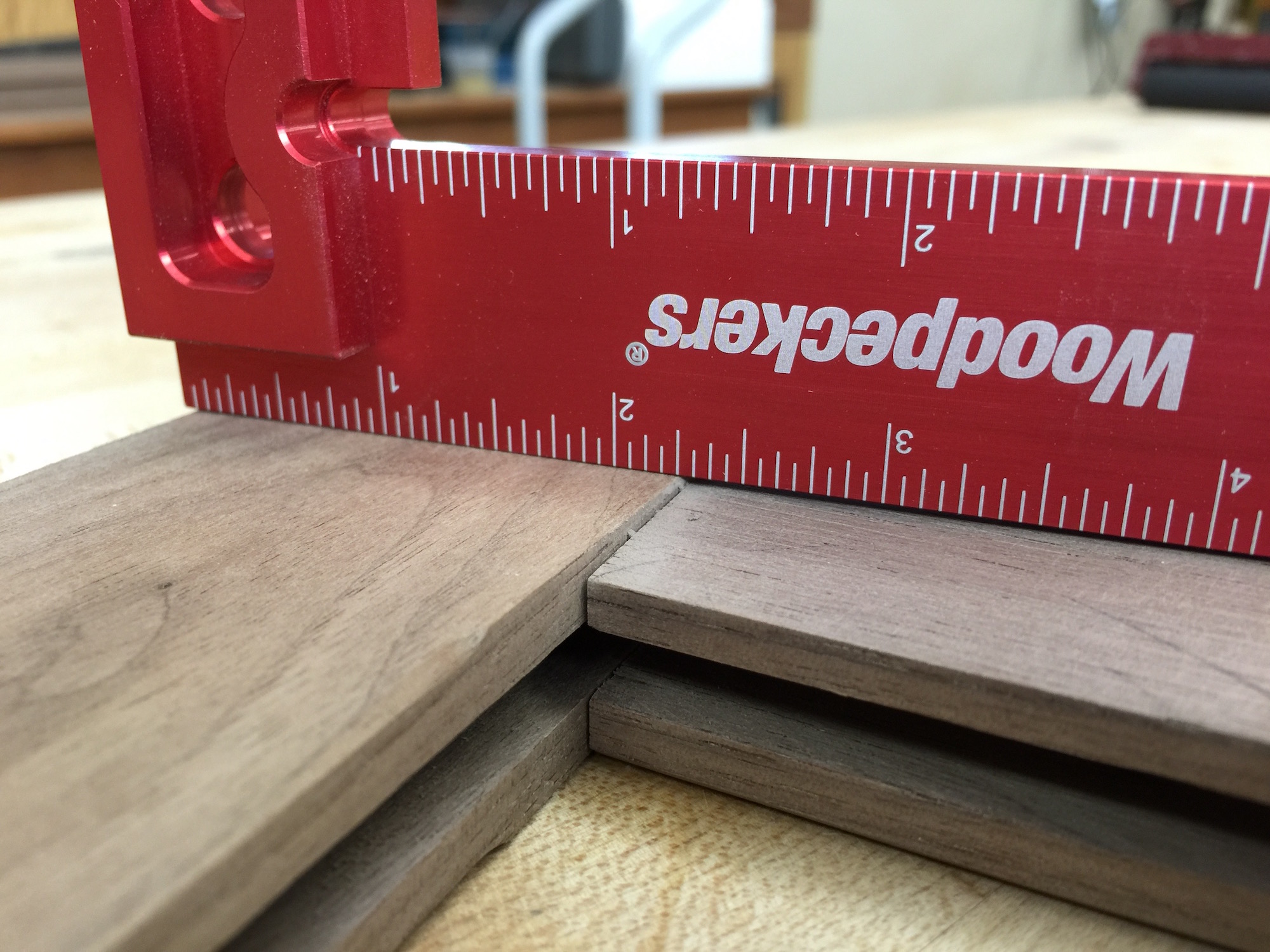 In the first week, a mistake was made that required us to have a complete mulligan. We were building the side frames for the Barrister’s Bookcase and after a quick dry assembly, I noticed a big problem. At nearly every rail and stile joint we had a discrepancy. Somehow, the boards were thinner at one corner. While some mistakes are salvageable, I just couldn’t see a way to avoid a complete do-over. We were on day 3 at this point so it was quite a punch in the gut to David. We discovered that as David did the finish sanding on these pieces, he wasn’t quite used the the balance requirements of my random orbit sander, something you REALLY need to think about when sanding narrow frame pieces. The end result was the thinning of almost every frame piece at opposing corners.
We had several discussions about the incident since then and the bottom line is David just does things differently in his shop. In the case of small frame parts, he usually uses his drum sander at its finest grit leaving only hand sanding prior to finishing. So balancing a sander on narrow pieces was something he’s never really had to do. Because he was a guest in my shop, he didn’t necessarily feel comfortable speaking up at the time and simply did what I asked of him.
While we did lose three days of effort, it only took us a day and a half to catch up and in the process we improved a few things along the way. The end result was a better project. So while mistakes are never fun, especially the ones you can’t recover from, they can certainly be beneficial to the project and to your skill set. Ultimately, the most impactful lessons are the ones you learn from mistakes on REAL projects. While I encourage folks to practice as much as they want, it’s the building of real projects where the rubber meets the road and when the stakes are high things tend to matter more.
Because this whole apprenticeship thing was designed as a learning experience, I made sure David understood that I wasn’t upset at all. This is what happens when you’re learning. And the reality is, we should NEVER stop learning the details of our craft. By extension, we should never arrive at a point that we don’t make mistakes. Well, if you’re truly satisfied with where you’re at in your woodworking education, I’m sure you can arrive at near perfection. But as soon as you venture into unknown territory, you can bet those pesky mistakes will come back to haunt you. So build! Make mistakes! It’s all part of the never-ending learning process!