This article was inspired by a question from Doug. He writes:
“I am building a bar top from 8/4 Walnut for my son’s new home, and he wants to have a very natural finish on it – no film finish allowed. My first thought was to use BLO, but some research has led me to think that Pure Tung Oil might provide better protection. Is Pure Tung Oil a better option than BLO for an open grained wood like Walnut?”

Tung Oil and BLO
 When it comes to protection, boiled linseed oil (BLO) and pure tung oil are pretty similar. One important thing they have in common is that neither one offers a great deal of protection. If you have to choose between the two, I would say to go for the BLO since its cheaper. BLO does is said to “yellow” a little more over time when compared to tung oil, but that is a moot point with respect to walnut.
Now obviously your son is the boss here, right? But indulge me while I make a small suggestion. An pure oil finish will certainly be better than nothing at all, but for a bartop, your son might regret this decision after the first few spills. I can totally understand why he doesn’t want a film finish though. Personally, I hate the look of those super thick bartop finishes (epoxy). If someone wants that much protection, they should just put down a piece of glass or simply use something other than wood (can you smell the contempt? hehe). But keep in mind this isn’t an all or none proposition and you can achieve a compromise between the highly protective plastic look and the barely protected natural look.
The Oil/Varnish Compromise
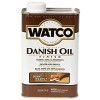 So my suggestion would be to try to achieve the best of both worlds. Give the bar top a very natural-looking finish, while imparting a great deal more protection than what you would receive from an oil alone. There are a few products on the market today that contain oil and varnish together, like Watco Danish Oil. Because there is so much oil in the mix, you would have to put on about 4 or 5 coats before you really start to get an appreciable film. However, if you apply 2-3 coats, the wood will retain the natural look while protecting the surface with at least some varnish. If you go with a matte or satin formulas, I think your son will be even happier with the end result as it won’t have the eye-glaring reflective qualities of a typical gloss concoction.
One of the great advantages to using an oil/varnish blend is you can monitor the surface after each coat and simply stop when you have the look you want. Dilute the mix with mineral spirits if you want even more fine control. Also keep in mind that you can actually make your own oil/varnish blend by mixing 1/3 mineral spirits, 1/3 BLO (or tung oil), and 1/3 polyurethane.
Either way, make sure you sand lightly between coats to keep the finish nice and smooth. After the final coat, either sand with 1200 grit paper or buff with 0000 steel wool. The wood will not only look natural, but will easily repel the occasional spill.
Related Resources: