This article was inspired by a question from Larry. He writes:
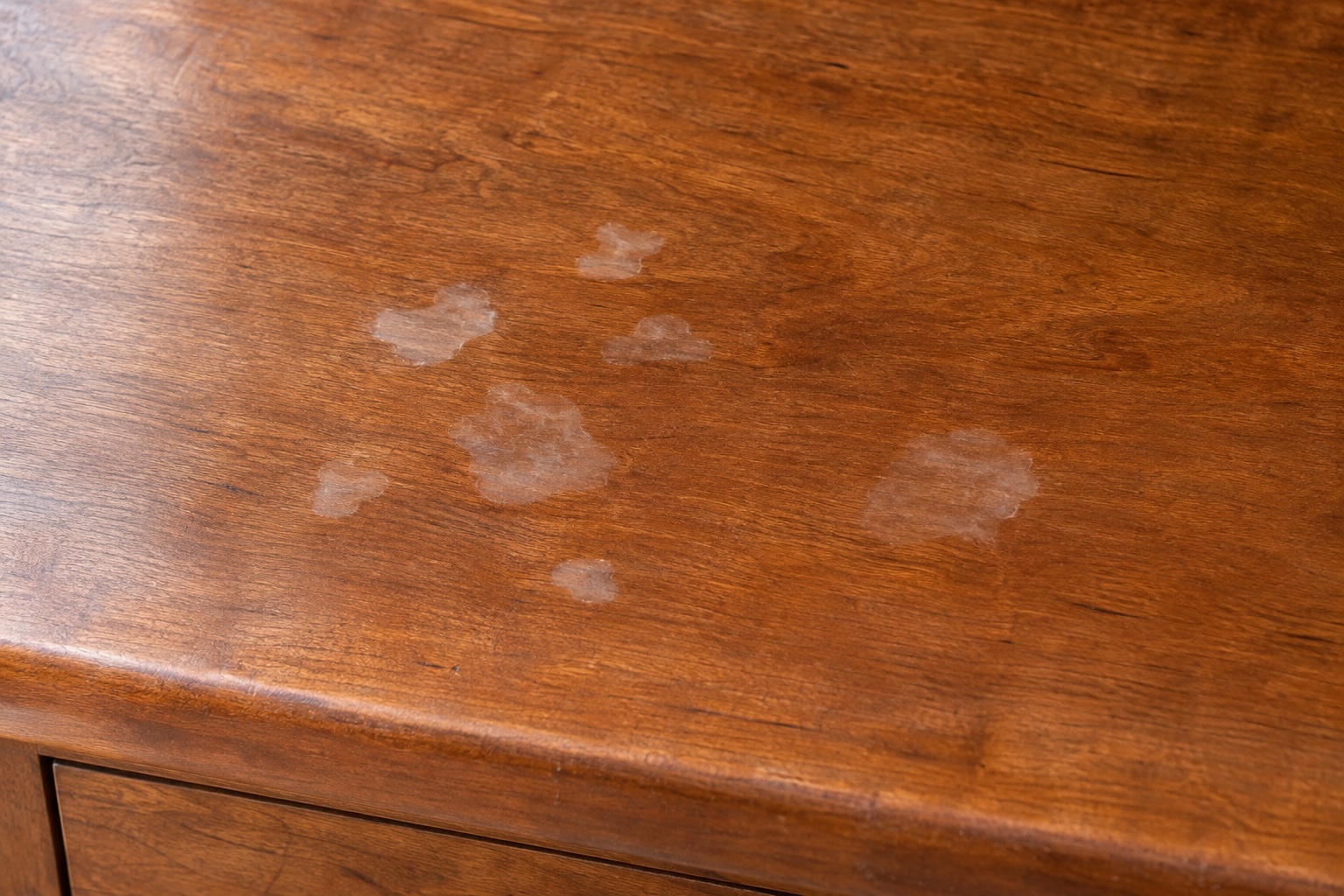
My wife’s cousin was cleaning the house when her three-year-old daughter decided to “help.” She sprayed Windex on several of her mom’s antiques and left white spots wherever she sprayed. Naturally, being the only woodworker in the family, I got the call. My first thought was shellac, since ammonia can clean it off brushes, but I’m not sure what’s on the furniture. Is there an easy way to remove water spots from a finish like this, or does it need to be stripped?

Free from Marc
Marc's Finishing Quick Guide
The finishing mistakes Marc sees most, in one printable guide. Big, easy to read type, made to tape to the shop wall.
- Picking the right finish for the job
- Scratches that show up after the finish goes on
- Blotch control
- Real dry, recoat and cure times
- Rough final coats
- Why switching products usually isn't the fix
Thanks! Check your inbox, the guide is on its way.
Something went wrong. Please try again.
We will email you the guide. Unsubscribe any time.

Want to watch it done? Wood Finishing in Practice
11 Guild lessons, over 7 hours: oils, hardwax oils, wiping varnish, water-based, lacquer, spraying, outdoor and workbench finishes, all on real furniture. $49.
See the lessonsPrefer to read? Marc's finishing book, $10
Larry, I’d give those spots a chance to dry before I did anything else. My first guess is that the water in the Windex got into the finish and left it cloudy. You see the same thing when somebody leaves a sweating glass on a table. You wipe up the water, but the white ring stays because moisture got into the film. A cleaner can also damage the finish itself, so if the spots still look the same after a day or two, I’d figure out what finish is on there before trying anything stronger. And if these are valuable antiques, I’d let a furniture restorer take a look before doing any experimenting.
Getting a white spot out of the finish
Start with a dry cloth and a little time. One reader who left birch disks on his dining table overnight woke up to twenty white spots. They cleared up while he was deciding what to do about them. That’s a pretty good argument for putting the sandpaper down for a day.
If the mark is still there, you can try a hair dryer on low. Keep it moving and aim for warm to the touch. Check the spot often. A little warmth can help moisture escape, but too much heat can soften the finish and leave you with a bigger mark. I’d skip the clothes iron. As for the mayonnaise trick I mentioned years ago, I’d leave the mayo in the fridge. Even if it makes the spot less visible, that doesn’t tell you whether the moisture is gone.
Polyurethane, lacquer, shellac and other film finishes can all develop white marks. They differ in how well they stand up to water and in what you can do once a mark is there. If you’re guessing at the finish, my old refinishing video shows how I test a small, hidden spot before I work on the part everyone can see. DIY Refinishing
Lacquer. With traditional lacquer, a light mist of lacquer blush remover can soften the surface enough for moisture to escape and let the film flow back together. A fresh coat of compatible lacquer can do much the same thing. When I first answered Larry, I suggested spraying a heavy coat of lacquer thinner. I’d go a lot lighter today. It’s easy to trade a white spot for a run or a patch that’s glossier than the rest of the top.
Shellac. Alcohol will soften shellac. If you know that’s what you’re working with, a pad barely dampened with the alcohol used to thin shellac can sometimes clear the mark. Test it somewhere hidden, then make a quick pass and let it dry before you decide whether to do more. A wet rag or a little too much rubbing can take the shellac right off. If you use solvents, follow the label for ventilation and keep them away from heat and flames. Bob Flexner on white water rings
Polyurethane and varnish. Once poly cures, it won’t flow back together the way shellac or traditional lacquer does. If drying and gentle warmth don’t help, a shallow mark may rub out with a fine polishing compound. Try that in a hidden spot first, especially on satin or matte finishes. You can get rid of the ring and still have a shiny spot exactly where it used to be. If the damage goes deeper, I’d lightly sand the finish and recoat the whole top with a compatible finish, assuming there’s enough sound finish left to work with. Rubbing Out a High Gloss Finish
What changed when I switched to hardwax oil
Once I started using hardwax oils on my furniture, I pretty much stopped seeing those milky white rings. The hardwax oils I use leave very little film. If water does leave a mark, what I usually see is a dark stain in the wood. Sometimes it’s a mineral stain, sometimes it’s a tannin stain. A wet steel can on white oak is a good example. Iron and tannins react and leave a black ring right where the can sat.
I’d start with the cleaner recommended for the finish. If the mark stays and looks like a tannin or iron stain, I’d try a tannin remover. Test it somewhere out of sight first, since it can change the color of the wood. With Rubio’s remover, you let it sit for a few minutes, dab it up, then clean the surface and let it dry. Once the mark is gone and the wood is dry, touch up the spot with the same oil in the same color and buff off the excess. If you’re using a different brand of hardwax oil, check what that maker calls for before you pick a cleaner or a stain remover. Rubio’s Tannin Remover instructions
Take a look at the repair from across the room with light coming in from the side. In my hardwax oil comparison, some of the spot repairs looked fine head-on and showed up as soon as I moved. If the color and sheen match, I’m happy to call it done. If I can still see the patch every time I walk past the table, I’ll redo the whole top. My Hardwax Oil Comparison
When to sand back to bare wood
The nuclear option, whether it’s poly, lacquer, shellac or hardwax oil, is to take the affected surface back to bare wood and start over. Sometimes that’s the right call, especially if the finish is failing in several places or a spot repair leaves an obvious patch. If the wood is still dark once the finish is off, deal with the stain before you put on a fresh coat. Be careful with veneer. It’s easy to sand right through it while chasing a deep mark.
For a few white spots from a spray bottle, though, I’d start with a dry rag and give the table a day or two. You might be done before you’ve even figured out what’s on it.