This article was inspired by a question from Jeff. He writes:
“I am using Helmsman Spar Urethane to refinish the front door of our house. It’s a one piece flat door — no recessed panels. I am applying it with a quality brush but I still get brush marks and hi-low points, also tried a sponge brush with same results. I know it’s barely noticeable but I absolutely abhor brush marks. After 4 coats, I have managed to sand it down fairly flat. Is it possible to thin Helmsman and spray it with an HVLP gun? To thin or not to thin?”
A Better Way to Apply Spar Urethane
When it comes to applying exterior finishes, many woodworkers struggle with brush marks, bubbles, and uneven film build, especially with outdoor formulas like spar urethane or varnish. Traditional brushing techniques often make finishes that are thick, slow to dry, and tricky to level out without streaks. Fortunately, there is a better way to apply spar urethane that produces smooth, consistent results without the frustration.
Before we get into technique, it helps to understand what makes spar urethane different from regular interior polyurethane. Spar finishes, originally formulated for boats, are made with more oil and flexibility to stand up to temperature swings, moisture, and UV exposure. They often contain UV inhibitors that help protect wood outdoors, making them ideal for doors, outdoor furniture, and exposed trim.
If you’d like a deeper dive into the chemistry and behavior of outdoor finishes, check out our article on the Difference Between Spar Varnish and Regular Varnish.
Why Traditional Brushing Isn’t Always Ideal
Most oil-based spar urethane products are fairly viscous straight out of the can. When you brush them on without thinning, they tend to drag, trap bubbles, or leave brush marks, especially on horizontal or detailed surfaces. Even when thinned slightly, brushing still requires careful technique to avoid high-low spots and uneven build.
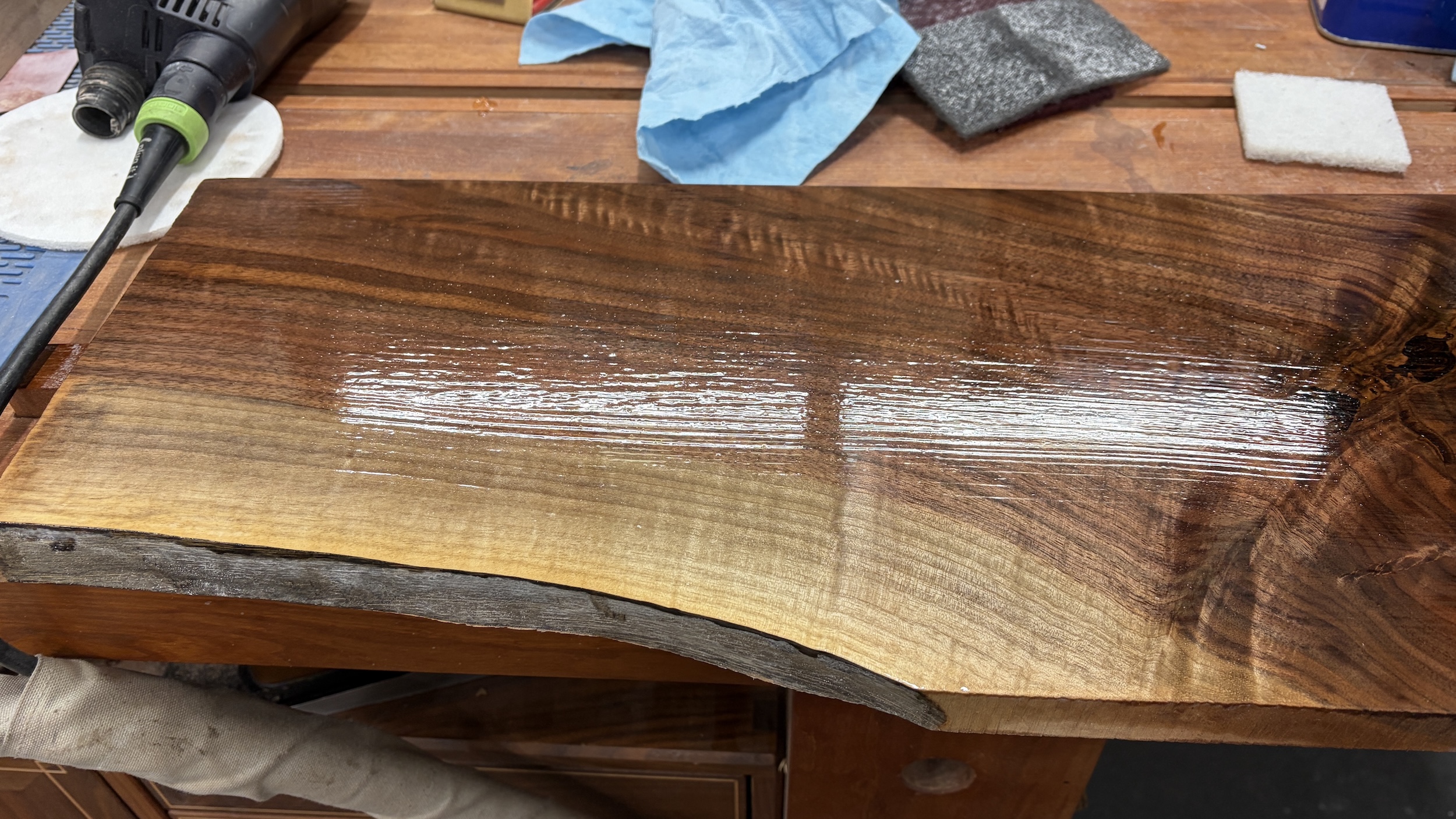
This is where a better way to apply spar urethane comes in.
Step-By-Step: Wipe-On Spar Urethane for a Superior Finish
Instead of brushing, consider switching to a wipe-on application technique. This approach is often easier for beginners and yields a much smoother film.
1. Thin the Finish
Start by thinning your spar urethane with mineral spirits, paint thinner, or naptha. A common starting ratio is around 75% finish to 25% thinner. This reduces viscosity dramatically, allowing the finish to self-level instead of dragging under the brush. If the finish is still too thick to flow out nicely, increase the dilution to a 50/50 mix.
2. Prepare Your Applicator
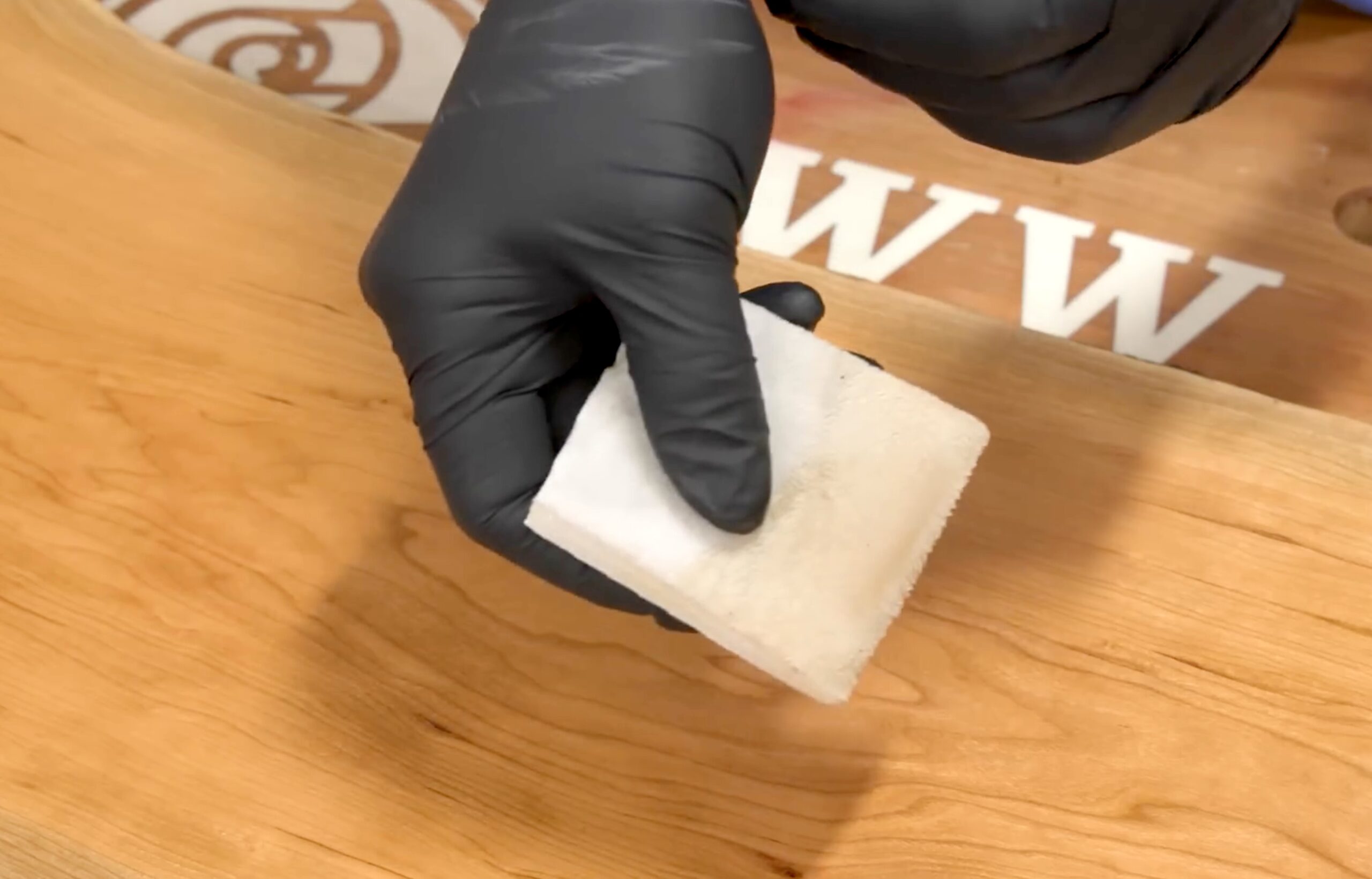
Use a clean cotton rag, ideally old T-shirt material. Fold it into a palm-sized pad for control and even distribution. Or consider using Makrs Pads (Save 15% using our code TWW). While these are a little more expensive, the microfiber surface produces and exceptionally smooth finish when used with oils and I highly recommend them. See my quick review here.
3. Apply Thin, Even Coats
Dip the cloth into the thinned finish and wipe it onto the wood using smooth, overlapping strokes. You’re aiming for a thin wet film, not a heavy coat. Avoid pooling, especially on edges and end grain.
4. Build Protection with Multiple Light Coats
Because you’re applying a thinner mixture, you’ll need more coats than with traditional brushing to build adequate protection. The upside is faster drying and fewer defects. In the right climate, you can often apply two coats in a single day.
5. Sand Between Coats
After each coat dries, lightly sand with 320–400 grit sandpaper to remove dust nibs and knock down raised grain. Wipe clean before applying the next coat using a lightly dampened rag or a tack cloth.
Additional Tips for Spar Urethane Success
Choose the Right Product
Not all spar urethanes are equal. Some are oil-based, others water-based. Oil-based versions offer warmth and flexibility but amber over time. My favorite oil-based exterior urethane is Epifanes. Water-based versions stay clearer but may require more frequent maintenance in high-UV environments. A good quality water-based outdoor product is Total Boat Halcyon.
Avoid Bubbles
Bubbles often come from over-brushing or aggressive stirring. Stir gently, don’t shake the can, and avoid going back over partially cured areas. Wiping dramatically reduces bubble issues.
If bubbles are something you fight regularly, check out: Bubbles in my Finish!
Want a Step-by-Step Video on Varnish Finishing?
For a full walkthrough on wiping techniques and achieving a smooth film finish, check out the Guild video A Simple Varnish Finish. The same wiping principles apply beautifully to spar urethane.
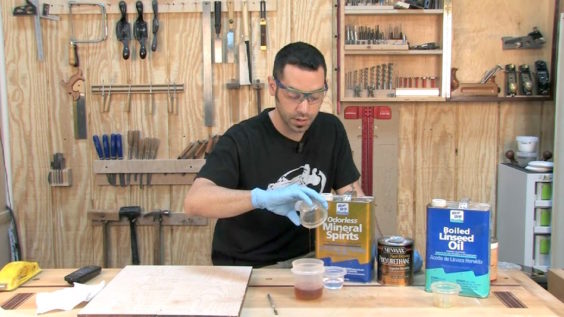
If you want to learn more about my particular finishing method, you should check out my video A Simple Varnish Finish. My goal with the video was to demystify finishing by going over each and every step of the wiping varnish process. Even someone new to the world of finishing can create a show-stopping finish if they follow the methods outlined in the video. So check it out!