Power Tools For A Hand Tool Shop


Josh, an experienced hand tool guy wants a recommendation for a good “first power tool”.

I am new to The Guild, but looking forward to the upcoming builds. I am a hand tool guy and have everything I need to complete a project with hand tools. However, after attending classes at Kelly Mehler’s, I see how machines can really help (dimensioning stock). I am beginning to look at a more blended approach. I was wondering what you might recommend. I often hear a bandsaw referred to as the Neanderthal’s Apprentice and was thinking that it might make a good first power tool. I don’t have 220v if that makes a difference. Also are there any other tools that I should be considering?

Hey Josh. A bandsaw is indeed a great tool to have in the shop. But its hard for me to say if this is the right “first tool” for you without more information. When considering which power tools to add to your arsenal, I recommend looking for the one that will open the most doors for you. In other words, the best multi-tasker for the type of work you do. As you can imagine, your woodworking style, focus, habits, and tastes will all play a role in dictating the direction you need to go. But I can give you a few things to consider based on my personal opinions and experience with power tools. Here are some of the tools I think you might want to consider:
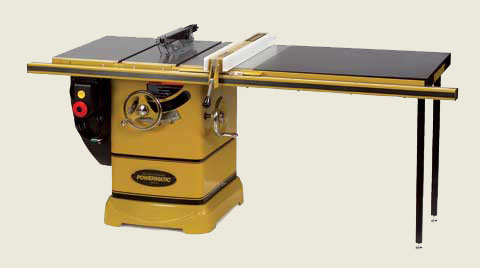
The Tablesaw – I think its safe to say that the tablesaw would be a “first tool” for many people. You can cut pieces down to size, rip, crosscut, establish a straight edge, and make all kinds of critical joinery with speed and accuracy. In my opinion, it truly is the heart of the workshop.

The Router – Never underestimate the versatility of a router. It will open up a whole world of edge treatments and joinery. Coupled with a flush trim bit/pattern bit, you have an incredibly powerful duplication tool. Furthermore, you can use the router for various flattening and jointing operations. Although this tool is second on my list, I don’t think I would want to work in a shop without one!
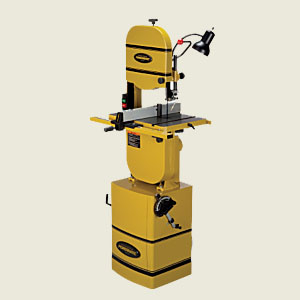
The Bandsaw - If you are looking to cut curves only, then you might be able to get away with the much cheaper jigsaw. But if you plan on resawing stock, a bandsaw is the logical way to go. You also might consider that the bandsaw is only part of the resawing equation. Your stock should be at least partially milled flat and square before resawing, and you’ll need to dress the stock afterward as well. Now if you plan on using your hand tools for these tasks, you are good to go. But if you are also looking for a power tool solution for milling, you will definitely want to consider a jointer and a planer.
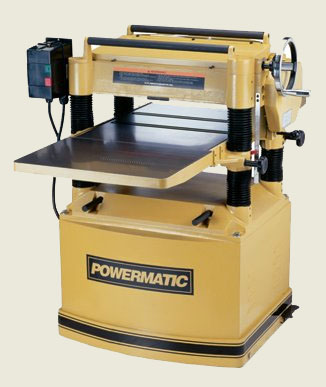
Jointer/Planer - I tend to lump these two together since they make a very powerful milling team. But these will not be inexpensive by any means. And if your primary goal with your new power tools is to mill your own stock, I would actually put the jointer and planer before the bandsaw.

As a bit of a disclaimer, I came from a power tool background and worked my way into hand tools. As a result, my perspective may be skewed. I am anxious to hear what some of you hand tool woodworkers think about this. What power tools do you find the most useful in your hand tool shop??


34 Responses to “Power Tools For A Hand Tool Shop”

  1. Rob says:

    Two big names jump to mind:

    - James Krenov famously had to defend his ownership/use of a band saw to visitors who thought he was a strict hand tool person.
    - Chris Schwarz likewise has made a name in hand tools, but remarks in one of his books on how he uses stationary jointers and planers in his work. “I’m not a hand tool guy…I’m an all-tool guy.”

    Both of these have in common that they see power tools as a means of speeding up the preliminary drudgery so that they can focus on the more important (and noticeable) parts of a project. In Krenov’s words, if you’ve exhausted yourself ripping a board by hand, you’re less fresh (mentally and physically) for the joinery.

    With that in mind, a neanderthal looking kill some electrons might perhaps view power tools like subcontractors: What parts of a job are so critical that you *have* to keep them for yourself and what parts are you comfortable forfeiting some of that hands-on closeness?

    • Lee Gibson says:

      Wow. I’d figure Mr. Krenov could say “Hey, look at this chair I made. Pretty sweet, huh? Anybody who thinks they can pick the tools I need better than I can is welcome to CRAM IT.”

      The results speak for themselves. I think it would be the height of arrogance to go into somebody else’s shop and criticize their selection of tools.

      • Frank Kovach says:

        I agree with you. And while I’m warmed up on this concept (of people criticizing stuff for no reason, other than their personal opinion-because this happened to me today) I can’t stand motorcycle riders who think a certain type of motorcycle is the only kind worth having, and feel the need to put down your motorcycle because it’s not like theirs. Sorry, venting.

        • Harold Robinson says:

          Really good topic

          I feel the same way about Motorcycles. I am a big motorcycle rider and find it rude that people get snobbish when they find out you ride a Honda. (I ride a classic 1982 Goldwing) I am never that rude to anyone like that. I will always say “Nice to see you riding today” I cant tell you how many times i stopped to help a Harley rider out. I can tell you way more often than Honda riders thats for sure.

          Same goes for tools. I will never critize what tools are used in a shop. I am always intrested in why the particular brand or model was slected. Tool choice is such a personal one. A lot of times tool reviews can’t be trusted because the reviewer is paid to review the tool so you don’t get a good honest review of how the tool performs.

          I have seen some what I feel are pretty good tool reviews in Wood Magazine. for example in some article they review cordless drills, and have a machine that has actually burned out some of these cordless drills.

          Right now I don’t do wood working because I live in an apartment. I want to very badly. But if I were to start (and I had all my hand tools purchaced) I would go with a really good router. I think that a router with a good router table makes the most virsital tool in the shop. You can cut datoes, edge material, even mill lumber. Mark has several videos which show how versital the router really is. I would recomend the plunge type like Mark has.

          BTW Mark, why Festool? I see a lot of equipmnet in your shop by Festool, why use that brand over say, Ryobi, Black and Decker, or any of the other brands like Dewalt etc etc etc.

          Harold

        • thewoodwhisperer says:

          Hey Harold. The main reasons I use Festool are the overall quality of the tool and the dust collection. Both are simply fantastic. Now the major downside is the price. So the only reason you see so much Festool in my shop is because they used to be a sponsor. But the reason they became a sponsor was because I identified them as a company I wanted to work with, based on their reputation for super high quality.

  2. Dan Drabek says:

    Choosing one’s favorite power tools is a very personal thing. And as Marc indicated, it depends greatly on what kind of items you tend to make. Coming from an early background of working nearly exclusively with hand tools, I’ve added power tools one at a time as I developed the need for them. I would list my most used power tools in the following order, from most to least used: Table saw, band saw, disc sander, drill press, jointer, planer, router. I could survive without any of them, but the most painful losses for me would be at the front of the list.

    The table saw can do more basic, time saving tasks than any of my other tools. While I use the band saw for re-sawing and cutting curves, it’s also one of my most used tools for quick, small cuts that I find myself making every time I turn around. It’s always instantly ready to use. The disc sander also falls into this category, for fine tuning of edges and shaping small items, it’s a huge time saver in the kind of work I do.

    But if you asked ten woodworkers to list their favorites, you’d probably get ten different selections.

    DD

  3. James Maichel says:

    This is an interesting topic. I am not hand tool or power tool guy myself just a new woodworker trying to collect some of both. When I first started 8 months ago I bought a cheap table saw of CL and it has been nothing but a nightmare. I have a router, sander and just recently picked up a drill press and planer and am going to get a jointer sometime soon. What I did wrong was I spent a lot money buying gimmicky tools, jigs and other woodworking aids that I thought would make my life easier. Boy was I wrong! I recently also purchased usable set of chisels and LN block plane. I wish I would have taken more time to research and visit forums before I ever made a purchase I would have saved my self a lot of money and had a decent starting set of tools. In the 8 months I have been woodworking I have spent close to $3000 and I really feel like only $1000 was spent worthwhile. If I had to do it again I would have bought a good table saw and blade, jointer, planer, router, jack plane, block plane, chisels, good layout and measuring tools, basic safety equip. I would probably of still gotten a lot of it on CL it just takes time and possible a small road trip to find some diamonds in the rough but I have seen them out there. Good luck with the tool hunting josh and please keep us posted on your progress.

  4. David says:

    You started out right when you said what you needed it for (dimensioning). Which means length, width, depth.
    Length – chop saw
    Width – band saw (if you rough lumber is not too long) or table saw
    Depth – if you don’t do this by hand, you will need a jointer and planer.

  5. Jen says:

    For dimensioning lumber, you really need all four: tablesaw, bandsaw, planer and jointer.

    A jobsite saw, a lunchbox planer and a benchtop jointer work “well enough”, but a benchtop bandsaw is useless for resawing. You’ll want at least a 14″ with a riser block for that task (I’ve heard bad things about most 14″ saws when used with riser blocks, but my G0555X works great).

    I can’t say I’d know which one I’d buy first if I had to choose. Probably the bandsaw.

  6. Chester says:

    I read an article about a master woodworker that, in his later years, decided to go “back to hand tools.” He gave most of his large power tool collection to his kids and friends. He said, however, that he would keep his jointer and his band saw. He felt that those tools were the most important for what he was doing.

    Just a thought …

  7. Vic says:

    If I could only keep three of my power tools. The ones staying would be my jointer, planer and bandsaw. All dimensioning can be done with these. While the tablesaw will give you a cleaner edge initially, it is very easily cleaned up on your new jointer or hand planed. Besides being much safer to use than a tablesaw, the bandsaw has a much smaller foot print and is more common to find in 110V than a good cabinet tablesaw, and I would urge you to buy quality up front. I’ve bought way too many tools twice and thus paid more for the final tool that has actually stayed in my shop.
    Welcome to the dark side, Josh.

  8. If you’re a hand tool guy, the clear favorite power tool in that world is the bandsaw. Many will even call it the “neanderbuddy” and consider it a part of a handtool shop. You can find examples of this across the Internet.

    Power tool guys always recommend table saws first. Great tools…I’d trade mine in a heartbeat for a good band saw. Hand tool guy here.

    Cheers — Larry

    • thewoodwhisperer says:

      Hey Larry. Any chance I can get you to give me a few examples and elaborate on why the bandsaw is the choice? Just trying to completely understand the hand tool user’s perspective.

      • Graham Hughes says:

        While not Larry, I do feel able to weigh in on this. In a hand tool
        shop one very rarely needs to four-square a piece of lumber, and if
        you have the right set of planes (hint: really coarse ones are
        invaluable) getting to where you need to be isn’t that difficult. But
        unless you’re content to do everything with 4/4 lumber you will need
        to do some resawing of drawer sides, bottoms, sometimes panels, etc.
        And resawing is a lot of incredibly hard work, even if you use the
        best period techniques and tools.

        Viewed in this light, one can look at your tool list. Routers are not
        useful here. Jointers/planers are convenient (I wouldn’t mind having
        one) but not that critical if you have a good set of planes. Table
        saws are at their best cutting large sheet stock like plywood; it’s
        not that hard to saw solid wood (and quickly) by hand, unless it’s
        resawing, which table saws don’t generally do very well at. And that
        leaves the bandsaw, which is superlative at the one task you hate
        doing the most, doesn’t demand too much space, and is a real enabler
        in a lot of ways, permitting you to work with lumber in the round.

    • Rob says:

      Marc brings up a fair question and perhaps grounds for a separate thread: While there’s a great deal of overlap between the capabilities of the band and table saws (i.e. both can rip) there are likely tasks that would lean towards one or the other as well as tasks that are just out of the question on one or the other.

      Off the top of my head: Crosscuts on the band saw are limited by the throat and a band saw can’t do coves, dadoes or rabbets. The band saw can, however, resaw and cut around curves. It’s also vastly safer for rough lumber (it can even disassemble small logs) whereas, absent some *major* jiggery, the table saw must be fed wood that is already square.

  9. Shannon says:

    I second Larry on the bandsaw. This is a tool that can chop up rough lumber easily and safely. Running a rough and uneven board over the tablesaw is a recipe for kickback, but the bandsaw loves it. Hand planing a board flat is really not that hard if you have already cut the board close to it’s final width and length so the bandsaw is my first stop if I don’t feel like the hand saw workout. Secondly, curve cutting by hand is particularly tiresome using fine pitch bowsaws and coping saws in thick stock. The bandsaw steps in nicely for this. Have you ever resawn stock by hand? I did it once, then let my bandsaw do it from then on. For those of us who plan on flattening and truing our edges and faces by hand anyway, the bandsaw is just the perfect companion. It is safe, remove very little, wood, and properly tuned, can be highly accurate.

  10. thewoodwhisperer says:

    From Wilbur:

    Here’s a hand tool perspective. Josh mentions dimensioning stock, so based on that comment I would vote for a planer first. Jointing is something he can probably do already with planes, so he can get a rough board mainly flattened on one side so that it will be flat enough to use a planer to finish the rest. A jointer would be good to quickly edge joint a board, but it doesn’t take much experience with a hand plane to be able to do this by hand.

    The bandsaw is the machine that I probably use most, with a lathe a close second, although I think that turning is really a hand tool operation. If you think about it, the motor is really connected to a spinning clamp.

    I don’t have a table saw. Again, coming from a hand tool base, sawing close to the line, and using a plane and shooting board you can easily do cross cuts that are square and clean. Rip cuts are done on the bandsaw with a quick clean up with a plane. I think that the resulting surfaces are at least as good, and maybe better than what you get straight off of a table saw cut.

    If Josh already knows how to make dadoes, rabbets, and grooves with hand tools, the router becomes much less useful. I don’t have a router, but I plan to eventually get one mainly for dealing with plywood, which hand tools don’t play very well with.

    Finally, again from a hand tool point of view, it’s good to keep in mind that any of the machines: bandsaw, jointer, planer, router or table saw will leave a surface that still will need improving with hand tools.

  11. Kenneth says:

    I second the planer (sans jointer), since dimensioning was specifically mentioned. Getting board faces flat and even is the most time-consuming and least rewarding task in the hand tool shop, in my opinion. I say sans jointer because I don’t see the benefit of that machine if you are already good at jointing with a plane, or have a jointer fence like this: http://www.leevalley.com/en/wo.....,230,41182 .

    Second to that would be a bandsaw, because of the resawing. Coping is fun, but resawing with a bow or frame saw is not so much.

  12. Glenn says:

    I would go with a cordless drill. Very versatile. Can screw screws and drill holes. Can even hang pictures on the wall for your wife!

    Most handy folks likely have it anyway. I had 3 before I ever got a bandsaw, tablesaw, or router

    • Harold Robinson says:

      hi Josh A drill is nice but will not cut wood down to size which is why he was considering a band saw

      Harold

  13. Josh Parker says:

    Hi I’m Josh and I use to work only with handtools.

    Marc, I believe I sent you that email several months ago. After doing some talking and researching here is what I did.

    Most of my handtool problems come with cutting curves and resawing. As Shannon already mentioned it is a pain in the rear, but a great calorie burner. This was driving my desire for the bandsaw. I can crosscut a board and shoot it square in no time flat, ripping is another matter.

    So in the end I picked up a Jet Pro 14″ bandsaw with the 12″ resaw built in. I also grabbed a dust collector. I heard bandsaws produce some fine stuff and I didn’t want that in the shop or lungs. I also grabbed a DW 735 planer because it was getting a bit tiring getting wide and long stock down to a reasonable thickness.

    Overall, I love the combination. It has increased my efficiency on projects without sacrificing quality. My curve cuts are actually a lot better. Being able to resaw and make my own veneer has been a nice bonus as well.

    I am still pondering the jointer, but only for face jointing boards. I have an 8′ bench so edge jointing a board goes quickly, however, face jointing takes time. However, most lumber I use is over 8″ wide so unless I had a huge jointer I don’t see the need at the moment.

    • thewoodwhisperer says:

      Hey Josh. Thanks so much for coming back and giving us an update.

    • Vic says:

      Josh, Check into Grizzly. I have the 12″ G0609X and love it. The problem with a jointer is gonna be your power restraint.
      I’m on the other end of the spectrum. I’ve been a power tool guy. I started rethinking my approach after a short seminar with Michael Fortune. What I said earlier about a bandsaw vs. a tablesaw is basically what I learned from him. I’m still building cabinets, etc for the shop. So, a tablesaw is still currently my center piece, but as I am learning and acquiring hand tools, I can see it becoming an deserted island, used more for assembly.

  14. Ben H says:

    Table saw hands down. Workhorse of my shop.

  15. jHop says:

    As Marc pointed out to me in my first email to him (but in much more eloquent and gentle terms), the band saw is more functional than the table saw when it comes to resawing lumber. And while he was able to come up with the photo of a jig I had described but never seen, I came to the realization that 1) I’m a fool, 2) others know better than I, 3) nothing beats creativity and imagination, 4) you are only limited by your imagination (and occaisionally hampered by your ignorance), and 5) I came to the right place.

    While I have haunted, lurked, and occasionally stuck my oar in where it was not wanted, I have also learned quite a bit. I once thought the only woodworking shop was one completely run by power cords. I know better now. I realize that, with only a few power cords and probably triple the number of hand tools, one can be quite the woodworker. (I’m not near that level yet. give me another 60 years…)

    Maybe I’ve picked up a bit more than I realized, since I also chose the 735…

  16. kosta says:

    I think you should get a jointer right after you get a tablesaw just because if the board isnt flat and the edges arent straight a brand new $3,000 cabinet saw isnt worth very much. The boards that say s4s were s4s 3 months ago but arent now. Thats something that took me a while to realize is that just because it says s4s doesnt mean it really is.

  17. Dan Drabek says:

    I think it’s almost impossible to evaluate what tools are most useful in your shop unless you have owned them. Until you actually have that tool at hand, you may not realize how many things you will find it useful for. I have tools I thought I couldn’t live without that are gathering dust–and others that I’ve put to work doing things I had never counted on doing.

    DD

  18. Heath says:

    Josh, I can’t recommend a Shopsmith highly enough. You can get a used one Craig’s List, sometimes including a bandsaw, joiner, and other accessories, for just a few hundred bucks. That one machine will give you a table saw, drill press (vertical and horizontal), disc sander, and a lathe. With additional accessories, you can have the aforementioned bandsaw and joiner, plus belt sander, shaper, mortiser, planer, jigsaw, scroll saw, etc. All variable speed. It is an extremely versatile system and would be an excellent and cost effective way to test out power tools to see what works for you. It’s a lot of bang for your buck.

    Pay no attention to the critics who say a Shopsmith is not accurate enough or complain about changeover time. The Shopsmith requires proper alignment and tuning just like any other power tool and once that is done, it’s just as accurate as anything else. Changeover time doesn’t take but a second or two. What takes time is “setup” after changing. But you have that same setup (adjusting fences, setting up jigs, etc.) on stationary/dedicated tools. You do have to plan a little differently, but again, you still have to plan with stationary tools, so the difference is the plan itself, not the need to plan. I think that’s the biggest part the critics have a problem with.

    Now, if your budget and space are both unlimited, then go with the big, dedicated, stationary power tools. But, I think a used Shopsmith would make an excellent first power tool.

    • Harold Robinson says:

      Heath

      This is an intresting thought I forget about ShopSmith I was impressed with their demo at the Orange County Fair here in California. This would be the ultimate tool if you are limited on space.

      What about being under powered I have seen complaints about that and owners modifying their machine with a 220v motor instead of the standard 115v motor to get the job done with out dogging the motor and tripping the breaker

      Harold

      • Heath says:

        I currently have 3 Shopsmiths. Two of the first 10ER “experimental” models from the late 1940s, and one of the “Mark V” models that, other than the table system, has remained essentially unchanged since the 1950s. The 10ER, unless modified, has a 3/4hp motor. The Mark 5 has a 1-1/8hp motor.

        I’ve heard the complaints, but I personally have not had any power problems with the Mark V. One of my 10ERs is missing some components so I have it dedicated to drill press mode (you can’t get a better woodworking drill press than a Shopsmith 10ER) and I have plenty of power there. The other 10ER has bogged down a couple of times when using it in table saw mode. But with a good sharp thin-kerf blade and an easy feed rate, even the 10ER has enough power.

        One thing you can do on the Mark V that has been discussed in the Shopsmith forums when people have had this problem, is dial the speed down a little bit. It seems counter intuitive, but at a lower speed you get more torque. So while the power is a potential problem, it can be worked around very easily. For most weekend woodworker projects, it’s quite capable. (Oh, and Shopsmith has a new DVR type motor coming out soon that will provide more power, a greater speed range, and can also run in reverse!)

        Personally, the biggest complaint I have with the Shopsmith is not power, but the size of the table. It’s just too small. With the table extensions, you’ve got great horizontal support – more than all except the largest table saws. It’s in front of and behind the blade that is the problem for me. But I have the older, smaller table (known as the “model 500″). The newer model 520 table is much larger.

        I actually have a larger Craftsman that is my primary table saw, but the Shopsmith makes a great second table saw for those times when I need to make a cut but don’t want to change the setup on my Craftsman. But, if the Shopsmith was my only table saw, I would manage just fine.

  19. Matthew Hills says:

    If you’ve already completed projects by hand, choose the power tools to reduce the time spent doing stuff you don’t like doing:

    bandsaw — resawing, rough rips and shaping
    planer — thicknessing, board after board after board…. in a few minutes.
    jointer — initial flattening and edge squaring (watch capacity)
    table saw — sheet goods, repeated cuts, and (lots)
    router — tearing out hunks of mahogany
    drillpress — right-angle drilling
    drum sander — surfacing resawn wood

    In an 80/20 shop, I’d guess bandsaw + planer would be the natural choices.

    In a 40/60 shop, I’d think the table saw would rise into importance, as more of the parts are brought into final shape with power tools, and the ability to repeat cuts is a big saver.

    Jointer gets lower priority than planers because of width limitations. 12″ planer is standard. Larger than 6″ jointer gets expensive and big, and you still might need to face flatten your 9″ board by hand.

    Router is versatile, but probably most redundant with the handwork that is most enjoyed.

    Matt

  20. Jason says:

    I think you’ve got to ask yourself why you’ve been using hand-tools up until now. For me, among other reasons I’m short on space – I don’t have a dedicated shop, I woodwork in half (more like a third) of a shared use single garage. I started out reading the Internet and thinking that table-saws, thicknessers and planers were how you did woodwork – brought some small D.I.Y grade kit and a portable site-saw (all I could afford or had space for) and hated it. Not only was the limited capacity, quality and setup of the tools frustrating, but I just didn’t have room to use the stuff safely or enjoyably. And don’t forget the dust extraction. Discovering that I didn’t need all that stuff, that woodwork can be done with nothing more than a bench, some layout tools, a few saws, chisels and hand-planes was a revelation – I haven’t looked back since.

    Dimensioning is readily done by hand. Sawing to a line is easy with a bit of practice and once you’ve planed one face and edge all you need is a marking gauge to get the other faces square and true. Unless you’re into production and have a lot of identical, repeated cuts to make (as a hobbyist I tend to make one off projects) or can justify very expensive, powerful machinery there’s no great advantage to power-tools. Rip cuts can be quicker on a table saw – but you’ll be surprised how long dimensioning takes with a planer/thicknesser.

    What I do think I miss out on though, is a bench drill. With one of those I could turn small parts like knobs and tool handles, quickly hog out material for mortices with forstner bits and when the mood takes me I could drill neater holes in metal than I can by hand – and a bunch of other stuff. I do keep a little portable circular saw, but I hardly use the thing.

  21. Fly says:

    I find power tools are a woman’s best friend, ladies – they make up for less upper body strength, and level the playing field.

    I come from a carving/sculpture background and got into furniture making building built-ins for our house – so largely hand tools then acquiring power tools bit by bit. My husband bought me a bargain contractor saw demo model table saw which I used for a year. I appreciated the gift but loathed the machine, and finally took it back to the big box store: “there is nothing wrong with this tool, I have used it for a year, but I would still like my money back so I can upgrade.” Amazingly they agreed, and I bought I proper cabinet maker’s table saw – never stint!

    I still make a lot of sculpture, so the bandsaw is my workhorse, but I also rough out joinery joints etc. Planers and jointers I have bought second hand, and my next upgrade is to a good sized planer rather than my current benchtop (which does amazing duty if I go slowly and take little bites of wood;) and moving from a 6″ jointer to an 8″. I have learnt that if I keep blades sharp, even my undersized power tools can do amazing things for me. So: Bandsaw; then table saw, planer, jointer and dust extractor.

Leave a Reply


Stay Connected

Search

Coming Up

Get Woodworking Week

2012,02,05,0,0,0

Box Week

2012,02,13,0,0,0

Video: Tapping Threads

2012,02,22,0,0,0


The Guild

What is the Guild?

The Wood Whisperer Guild is a unique and interactive online woodworking school. We invite you to join   our premium membership and build 2 projects over the course of a year with Marc and your fellow guild members.

Visit the guild page
for full details.

What's New

Coming Up

Video - The Dovetail

2012,02,10,0,0,0


Woodtalk Online


    Support our Advertisers


    Local Market


    The Guild

    An interactive online woodworking school. Learn how to build furniture at your pace with the aid of incredibly detailed videos. Members recieve numerous other benefits including discounts and access to special live events.

    WoodTalk Online

    Connect with your fellow woodworkers in a friendly environment. Learn something new or simply share your knowledge. Design, Share, Build.

    Stores

    Support us by shopping in our store. DVD’s, t-shirts, hats, coffee mugs, project plans, and more!

    Behind the Scenes

    Education and Entertainment for the modern woodworker.

    Contact

    Education and Entertainment for the modern woodworker.


    (n) Copyright © 2010 The Wood Whisperer. All rights reserved.
    Designed and Developed by Underscorefunk Design