Wenge and Cherry Hall Table – Viewer Project
Let’s check out Jonathan’s unique design and unconventional use of joinery:
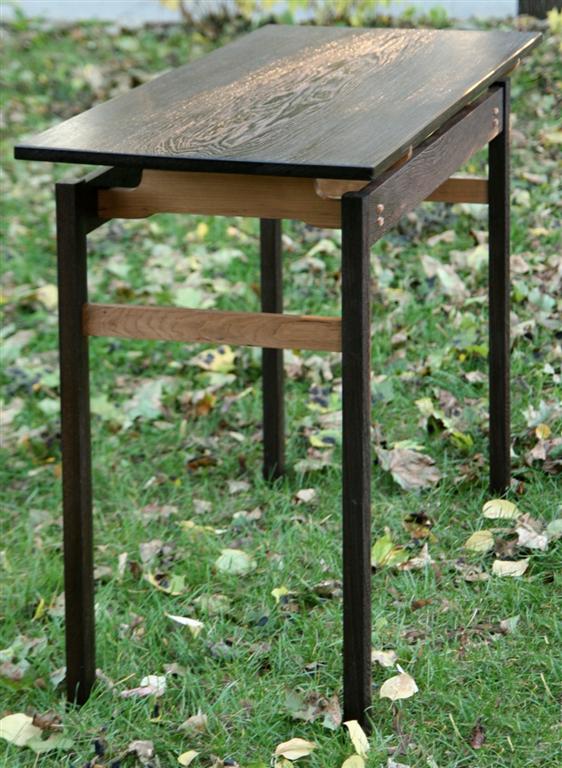
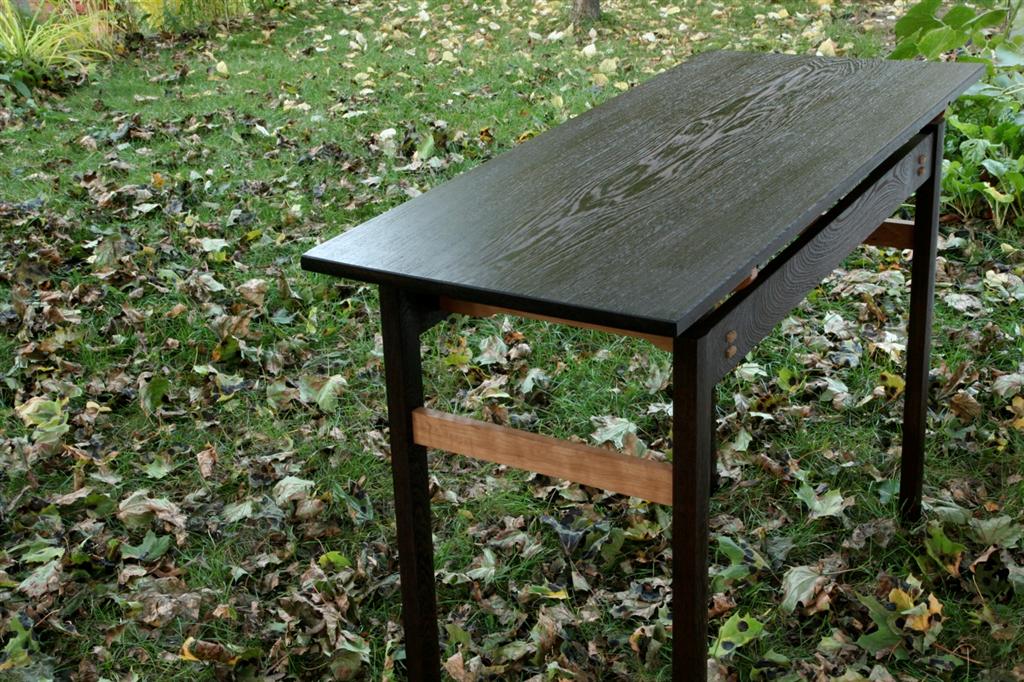
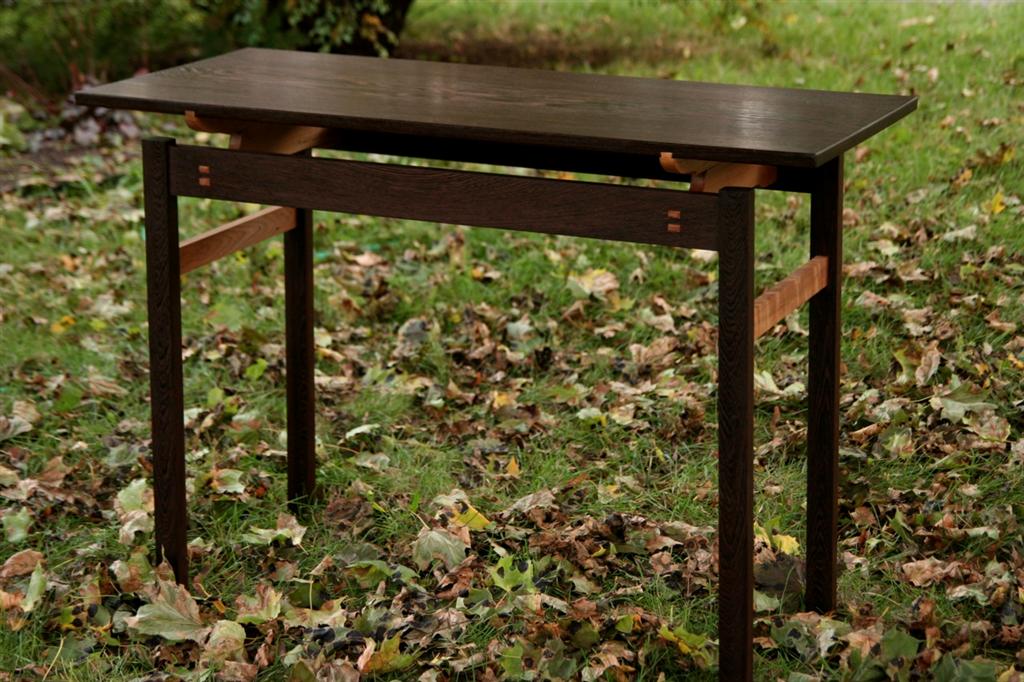
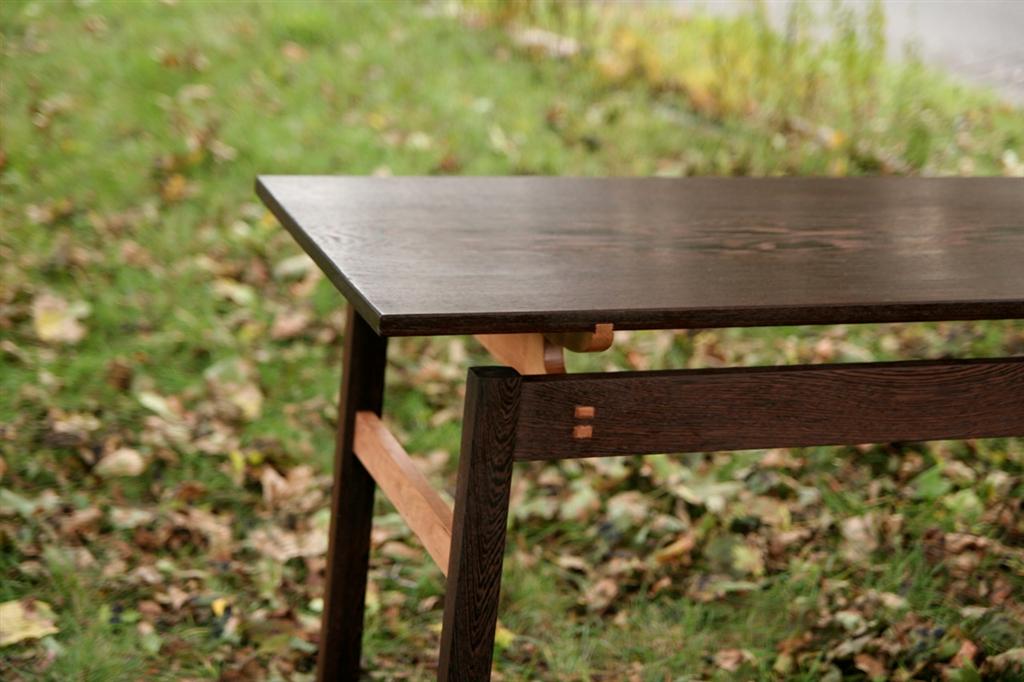
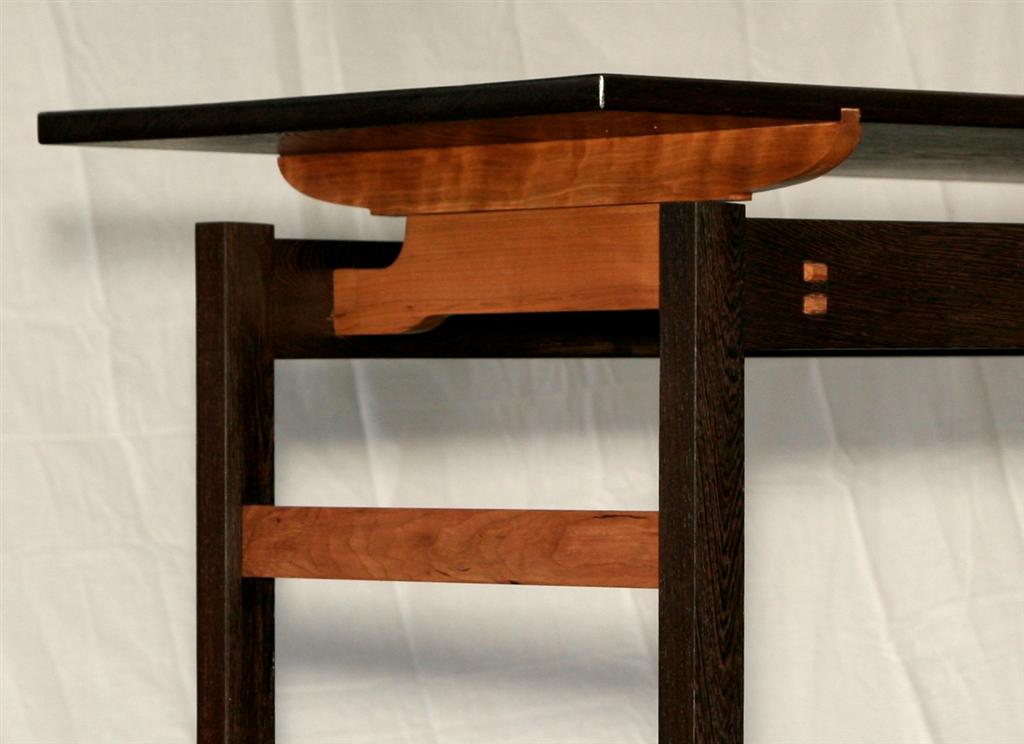
So a couple of months back I emailed you asking ‘how the h*** do you finish wenge?’ You responded with a brilliant answer which I followed some of, and sorta “adapted” the rest. Here is my finished Asian “inspired” hall table. Its mostly wenge, (the top is from an 8/4 slab that I resawed (took nearly a bloody hour on a 14″ Delta with a riser block…) The sliding dovetails, the floating table top supports and the leg stretchers are cherry. I finished it with Benjamin Moore Interior Wood Finish, Low Lustre Polyurethane (435-00). Thanks for the help by the way: water based poly, my usual choice, looked like mud on a scrap piece, then flaked and peeled off.
This piece was a complete departure from my typical woodworking. Up to this time, all of my pieces have been maple and cherry, and very much the simple forms of someone who is Shaker inspired and admires the work of folks like Christian Becksvoort. I took a class taught on “Asian hall tables” and decided to spread my wings by trying an exotic wood, and a completely new form with some curved work. The instructor had asked the class to do a simple Asian style table in walnut, but after seeing some of my work permitted me to work independently from the other class members by taking his form, and applying my own expression to the table.
I had some beautiful small pieces of cherry left over from making a bed for one of my daughters, and the use of those pieces for some highlight pieces within the table seemed to make perfect sense. I used the cherry for the sliding dovetail cauls for the table top, and for the through tenons for the table support. Artistically I suppose the use of the cherry ties the project back to my earlier work, but it also provides a visual contrast to the wenge. The slight angle to the joinery between the legs and the table aprons gives the table a slight airiness, and the cloud lifts separate the table top from the rest of the piece. I also softened the legs by using a very slight bevel cut to put pillowing on the legs to bring out the grain and figure of the wenge.

Comments
5 Responses to “Wenge and Cherry Hall Table – Viewer Project”Speak Your Mind and Maybe Win a Prize!
Leave a comment and you could be a winner in our Wood Whisperer Giveaway!And if you want a pic to show with your comment, go get a gravatar!


Looks Great! Very intriguing design on the table.
The table looks great. I was especially impressed with your grain matching on the top. cool.
I have had problems with my 14 inch delta too. If yours is one of the ones sold in recent years like mine is, it is terribly underpowered. 3/4 hp motor. I souped mine up with a bigger pulley and a better blade. It did make a difference. I also plan to add a bigger motor. But, I regret getting the saw in the first place now because with all the add-ons I have put on it I should have just bought a better saw in the first place.
I really like how the top of the legs protrude above the apron slightly. They almost look like their reaching for the top. Great joinery, photos and story. Very inspiring.
Very well done. I agree, you did an excellent job matching the grain on the top.
Thanks for the nice comments folks.
As the crazy guy who made it, its nice to see Marc post it (i was a little surprised actually, given that Marc and I were emailing about it around 6 months ago. Those are the fall maple leaves from my front yard in some of those pictures. :-) :-) )
My delta is one of the special edition ones from about 10 years ago before Delta cost reduced the heck out of the saws with the “X” series saws. 1 1/2 HP, but I was resawing 11″ thick(tall? wide? what DO you call it when its standing on edge…) and the saw was sure having a heckuvatime… Patience was at a premium. (and it was a new saw blade at the beginning, and by the time the resawing was done that blade was toast… I hadn’t realized how abrasive wenge was.
The biggest thing i messed up in the table is that the front and back aprons are nicely curved… and I got one of the boards flipped, so the grain is completely and totally wrong, the grain’s opposite to the curve. (SIGH)
I should take a couple of pictures of the “wrong grain” so that we could post it as “here’s how to do grain wrong” sadly its a case study :-)
The biggest challenge of all on the table was flattening the top after the resaw. I ended up using a veritas bevel up jack plane with a toothed blade. Pretty much everything else just skipped over the wenge and wouldn’t cut.
Hope everyone is having a good monday!