This article was inspired by a question from Nathan. He writes:
Firstly, I absolutely love your show. The reason I am writing is that I have been watching David Marks Woodworks and noticed in a couple of his episodes he uses a pneumatic power sander. There is not much literature on the web regarding these machines. I was wondering if maybe you could highlight some of the characteristics of these machines. Watching the video I could not see any visible dust collection and all I could gather about these machines is they are more powerful than the electric sanders. Thanks a lot!
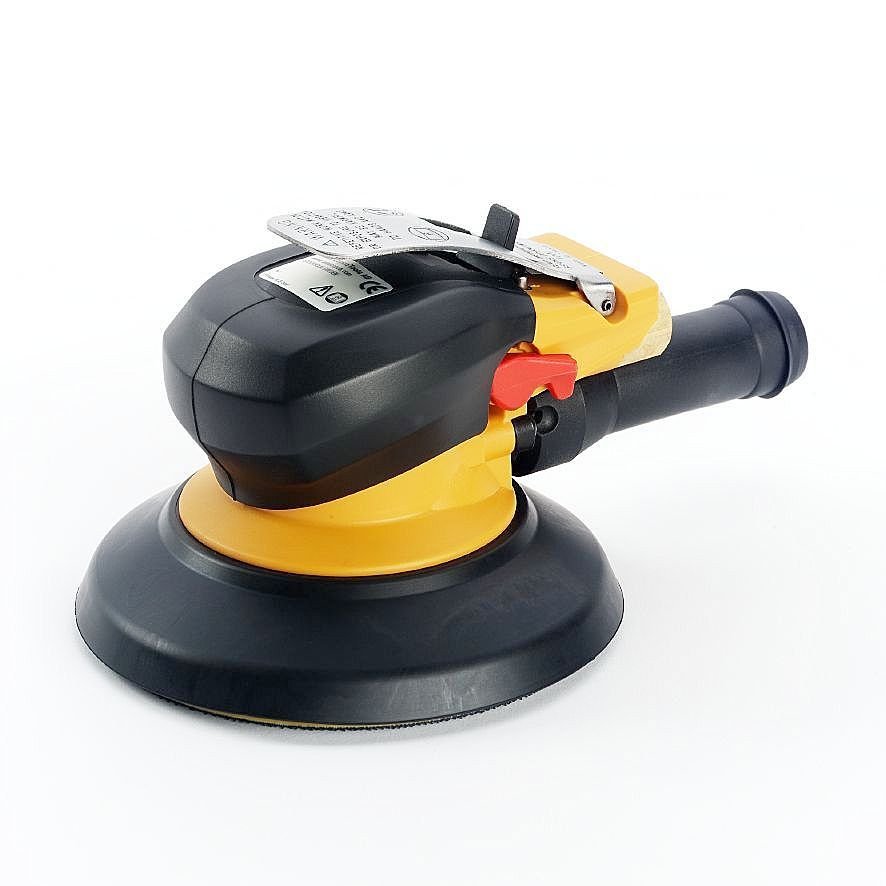
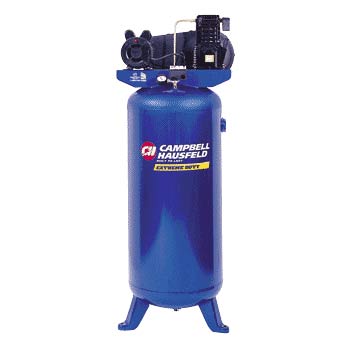
To be completely honest, I actually don’t have a whole lot of experience with pneumatic sanders. In fact, the only time I used one was in David’s shop. But I can still give you a some things to think about. There are a few key differences between pneumatic and electric sanders that may or may not matter to you. Pneumatics are generally lighter. After all, there’s no motor. As a result, they can also be quieter and longer lasting. The tools themselves are usually much cheaper too. That is, on a tool for tool basis they are cheaper (again, no motor). But obviously to use a pneumatic tool, you’re gonna need a big daddy air compressor. The smaller units will cycle repeatedly which will ultimately kill the compressor. And from what I hear, pneumatic sanders can also be more powerful than our standard electric sanders.
Now one big disadvantage that I see is the one you mentioned: dust collection. Although I have seen a few models on the market that have a connector for the dust. For most of us these days, good dust collection is a must-have. So that’s something to keep in mind. Ultimately, if you already own a big compressor, or if you envision yourself using other air-sucking tools like die grinders, air guns, and conversion spray guns, the pneumatics might just be a good choice.
***Anyone out there use pneumatic sanders? Feel free to chime in with your opinion.



22 Responses to “Pneumatic vs. Electric Sanders”
The way I see it is its kind of like saying go hard or go home and its like if you want to use air sanders its easier to load up on air tools because your gonna need a big compressor. If you have a smaller compressor say under 25 gallons then its going to be turning on every few minutes and that costs more money for the electricity to run the compressor then it does to use an electric sander. It also wears your compressor down
Just wanted to make sure all the key pneumatic tools are listed. Don’t forget the Potato Gun.
This is a great question. I’d like to add that a pneumatic sander is primarily beneficial to the industrial woodworker who already has a big compressor. They’re really cool (love that “Monster Garage” whirrrr-ing sound!), but in general a pneumatic sander is just not realistic for the hobbyist or even a daily woodworker due to that whole needs-a-pretty-big-compressor requirement. Your $69 Porter-Cable or similar brand random orbit sander will last a long time in the care of recreational woodworkers.
Cheers!
There is always a tradeoff between using electric vs. pneumatic. Pneumatic has advantages in a higher volume production shop and is commonly used in industry. You must have an affordable source of a large volume of compressed dry air to make it worthwhile. For most woodworkers, electric or battery is the best financial option. They are readily available and affordably priced.
I imagine car geeks are a lot more prone to have pneumatic wood toold, because they likely have other air tools already setup – impact wrenches, etc. I have a smallish compressor to operate a few mail guns. I would take the sound of a spinning motor over the sound of that compressor charging any day of the week, and twice on Sunday.
A few reasons why you should consider switching to pneumatic shop tools:
The motor in your compressor is going to be more energy efficient than a bunch of tiny, cheaply made electric motors found in all but the highest grade power tools.
The pneumatics never break down, since there are no motors in them; and because the air coming out of a compressor is super cooled, the machines never overheat (the biggest cause of electric tool failure).
Look on craigslist and you’ll find 50-75 year old pneumatic tools that work just as well as the day they were made.
Plus, once the cost of the compressor is absorbed, pneumatics are about half the price as their electric counterparts.
Finally, the pneumatics have a much lower carbon footprint since they require less manufacturing, less copper wiring, electric components, etc.
If you’re serious about your craft, you need to get serious about pneumatics. I even have a pneumatic chainsaw now. Get a compressor with at least an 11 scfm rating so you can scale up as needed. Expect to pay at least $600-$1000 or find a used one on craiglist for $300 or so.
I have used both pneumatic and power sanders for many hours. Obviously they both have advantages and disadvantages but ultimately I like the pneumatic better. I am a little spoiled with a very large compressor. I am a hobbyist turned pro turned back to hobbyist. During my pro days I was able to accumulate some nice equipment. If I didn’t have that luxury I would have stuck with the Festool I purchased at one point.
I’m not sure where people get pneumatic sanders for half the cost of an electric though. To purchase a nice new one runs at least $140. There are many random orbit electric sanders for half that price.
If I had the room I would probably switch, I have the air but like Marc mentioned there is a problem with dust control. Typically in larger shops pneumatic tools are used in conjuction with large down draft tables to handle the dust. No room in my closet for one of those so…
I still love my PC 5″ Random orbital. Use it more than any other tool in the shop.
Ironically enough, I nixed the idea of asking this very question.
From a hobbyist standpoint: given a small shop, the compressor size required to run many air tools is often the choke point. Then, there’s the fact you need to either run air lines (metal or hose) or have a way of getting the air in a portable fashion to the tool. Images of air hose snaking across, over, and through tools cause me to shudder.
If, however, you plan on setting up shop in the garage, you can feasibly get a larger tank that can be mounted (or stored, if it has wheels) in the corner. YOu could put the dust collection nearby, or in the opposite corner, so you don’t lose too much space. The benefit of going large tank in the garage is you can use it for other purposes. (car repairs, filling tires or pool toys, etc.)
My big concern is the dust collection. my understanding of the way air tools work is that the air flows from the tank, through the tool, and out across the work surface. Helpful when you are worried about project visibility. but this will scatter dust around unless, as mentioned earlier, you use a downdraft table. A serious air filtration unit would probably not be a bad idea, either.
I ruled it out for my shop for the time being. Three reasons: price is out of my budget for the next year or two, space requirements are more than what I have right now, and health hazards with the dust control issues. (I’m not far from serious need of a serious dust collector, as I have found more dust than I was comfortable with in the filter of my furnace.) But that’s me. You may have different concerns. (By the way, Handy Magazine had an article on running air lines last year. I found it helpful in coming to my decision.)
I have managed several shops where sanders were used hours on end every day. What I learned is that pneumatic sanders were able to handle this work load with very few breakdowns. On the other hand, an electric sander of the type used by woodworkers, would burn out in just a week.
I would think the average woodworker would not require the extra durability that a pneumatic sander offers.
Also considering the cost of not only the sander, but the air lines, large compressor, and air dryer, I would think the average woodworker would not be able to justify changing to a pneumatic sander.
Hey guys, great topic. As with most of us I have a small compressor for pin nailers, staple guns and blowing up the odd basketball. I manage an automotive repair center and its air tools all the way. But what we have found is that along with large volumes of clean dry air, we also needed a constant supply of lubrication for the air tools or they would not stand up.(and these are all Snap-on tools) We needed to have an oiler installed in the main line. My concern though, is this very light oil film going to be coming out the tools exhaust port contaminating the work surface and possibly posing finishing problems later on ?
I built a place for a large compressor and dedicated wiring for it. I ulimately nixed the idea because of dust concerns. If anyone has a great solution for the dust, I’d love to hear it.
Since I work in a fairly large professional shop and have a more than adequate supply of air, it’s a no-brainer for us. Everyone has pneumatic sanders, everything from high-end Dyna-brade to the cheapest thing from the discount houses. As has been mentioned, the pneumatic stuff holds up very well. Some of the cheaper units have been around there for years. As I would expect with electrics too, the biggest difference you notice between them is in vibration. The more expensive models don’t vibrate your hand as much.
My favorite feature of pneumatic sanders is the ability to slow them down. IMHO most of the electics run too fast. Of course some guys run the air powered units on full blast too?
Running slower does several good things. It is easier on the sandpaper to start with. It lasts longer and doesn’t create nearly as much heat. It also doesn’t fling the dust around as much. It also gives me a better “feel” as far as what is actually happening. This ruduces the potential for the “pig-tail” scratches.
There is however a place for electrics. Once in a while we make and install a Solid Surface (Corian,etc) counter top that requires a “field seam”. Since this to be glued and finished on-site….no air. That is when the Festool comes to the rescue.
Hi, Its been my experience that air tools such as sanders for instance are primarily used for working with metal, where you don’t want to use electric ones (metal grit in a electric motor, not good) most of the electric sanders I’ve used suck the dust in to and discharge to a collection system of some sort going past the motors workings.
Air tools on the other hand don’t do this they need clean air and oil to keep the moving parts moving and oil on your wood is not good and oil in the air you breathe is even worse.
Hi all,
I in a past life I sold and repaired power and electric tools in a small tool shop in South Australia most air tools have a CFM rating on the box or in the paper work and should not exceed your air compressor pump’s CFM output, the tank is only there to provide a small reservoir of air for short bursts of hi demand and to smooth out the air flow from the pump. I would make a point of explaining this to customers considering purchasing the small imports as most of the pumps are not much better than a 12volt car compressor and I replaced over 12 motors/pumps after purchasers used sanders and grinders , now as a furniture builder I have a few air tools and run a 3.75Kw 30CFM compressor this gives me around 5-7 CFM to spare when using a 6 inch sander however an air tool is only around 20% efficient so it is still better to use a 500w electric sander to save on your electricity bill, although there was a device a few years ago on a TV show “the new inventors “ that used two hoses on the air tool to return the used air to the inlet of the pump through some special valve, The inventor claimed it improved the efficacy to 80% and allowed a smaller compressor to be used
Hi,
I have booth electric and pneumatic sanders. I always go for the pneumatic if I have a choice.
A good quality pneumatic sander has a much better dust collection capabilities. I have 150mm sanders with 21 hole pads. They hook up to any standard dust extraction and if you couple this with the Abranet sanding disc system, you get little or no dust remaining on the part you are sanding and more importantly, in the air.
Speed control is also far superior on pneumatic sanders. With no heat created. Top speed can be up to 12,000 rpm!
They are quieter (although your compressor may not be… Mines in a sound insulated box so I can hardly hear it.)
They are much lighter in weight than the equivalent electric sander.
Actually, all pneumatic tools have a motor, albeit an air powered one, but they do last a very long time. They are also easy to maintain requiring only a few drops of oil once in a while.
And Finally the Big reason I use pneumatic sanders! Ultra low vibration! If you use a sander for an extended period you can get a a symptom called White Finger.
http://en.wikipedia.org/wiki/V.....ite_finger
Although electric sanders are coming along, the pneumatic sands are leagues ahead (Industry driven)
Oh and a final note, most hobby compressors are set up to run at 8bar. However, on most compressors the parts (check your equipment first) are rated to happily run at 10bar. so you can crank the pressure up which will give you an effective larger volume. run through a regulator and dropped to around 5bar will power most tools effectively without having to shell out for a larger compressor.
Its also good practice to stop using the tools for 5 mins after every 15 mins of use.
N.b. I may be a little biased as I do supply sanders to the avionic, car, commercial and furniture industry. :o)
This is the type I would recommend if you are buying one and have the cash.
http://www.mirka.com/accessori.....ifications
happy sanding
Lex
hello lex this is john from scotland i have just bought an areo elite for polishing and some sanding of table tops that have a very high gloss finish. i have a rigid twin tank 5 gall will this work if i follow your 8 bar / 10 bar procedure.
any advice is most welcome .
john russell
When working with wood such as pine, I usually stop at 220 and then use 320 to 600 between finish coats. However, I made a small weather station out of maple the other day and since I was only finishing with beeswax, I decided to sand up to 1200 before applying the wax. The pores being ”’sealed”, the wood had less tendancy to absorb too much wax and I was able to really polish it out. I love the finish and I find myself passing my hand on it whenever I walk by it.
I made the rookie mistake of buying a pneumatic sander thinking I could use it with my 6 gallon pancake compressor. HA! What WAS I thinking??? The motor runs constantly and there isn’t enough CFMs to sand anything under any pressure.
Anyone want to buy my (new) pneumatic sander?
Just to chime in on a long inactive thread, I WISH that I could afford to run air sanders in my shop. The vibration of the electric models makes them harder to control and makes my hand very tired. I signed up for open woodworking evening class at my local community college so that I would have access to air sanders, multi-routers, lathes and a thickness sander. This way I get the Cadillac tools without finding space in my shop or wallet.
Also, I love the variable speed capabilities on the pneumatic sanders!
The killer reason to get a pneumatic sanding set up is that you can wet sand lacquer finishes. I spray pre-cat lacquer and finish it with 1000G Abralon sanding pads which must be used with a lubricant. I use water. This gets the little nibs that always wind up in the dried finish. It also makes a consistent satin sheen a snap. Before, I struggled with Scotch-Brite pads, steel wool, fiber wool, Abranet in an attempt to finish the finish. This has been a huge advance for my finishing.