Back in March of 2008, I had a chance to review the Earlex HV5000 Spray Station, and I recently added an update to the review to reflect my current opinion of the unit. You can check that out here: Music to my Earlex
The HV5000 is one of the best bargains out there in HVLP turbine sprayers. Despite the excellent performance of the unit, I did have my questions about motor power, longevity, and overall quality of parts. As someone who used to drag my spraying rig around to job sites, I know the beating these units have to endure. So for those of you who need a little more beef in your turbine, the HV6900 just may fit the bill.
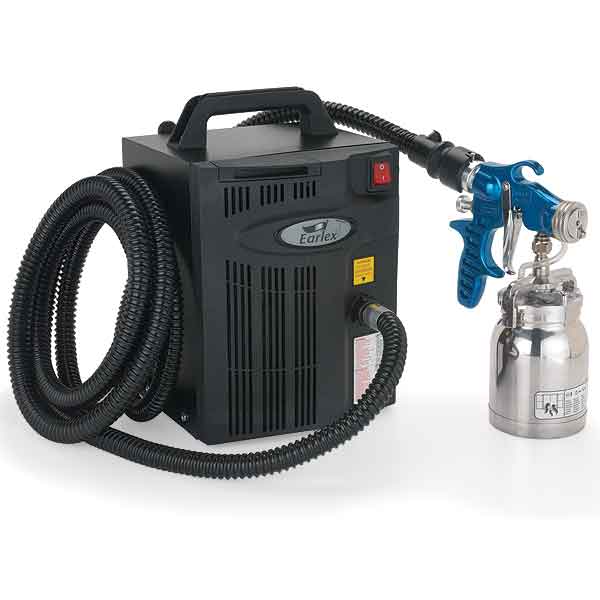
The HV6900 features a 3-stage industrial Ametek motor (5psi), a more durable 13-ft hose (with an optional 30-ft super flex hose), front-loading filters, an improved gun design, and weighs in at under 25 lbs. The turbine itself is exactly what you would expect from a 3-stage unit. You can literally see the power of the airflow in the robustness of the spray pattern. A smooth even fan was achieved with numerous finish types and the unit completely atomized everything I threw at it. Now the one thing I didn’t test was latex paint. Honestly, I never really spray latex so its hard for me to offer an informed opinion. But when I ran some latex through the HV5000 in my previous review, the results seemed decent enough once the paint was thinned. So my assumption would be that with the more powerful 3-stage turbine, latex would be no problem at all.
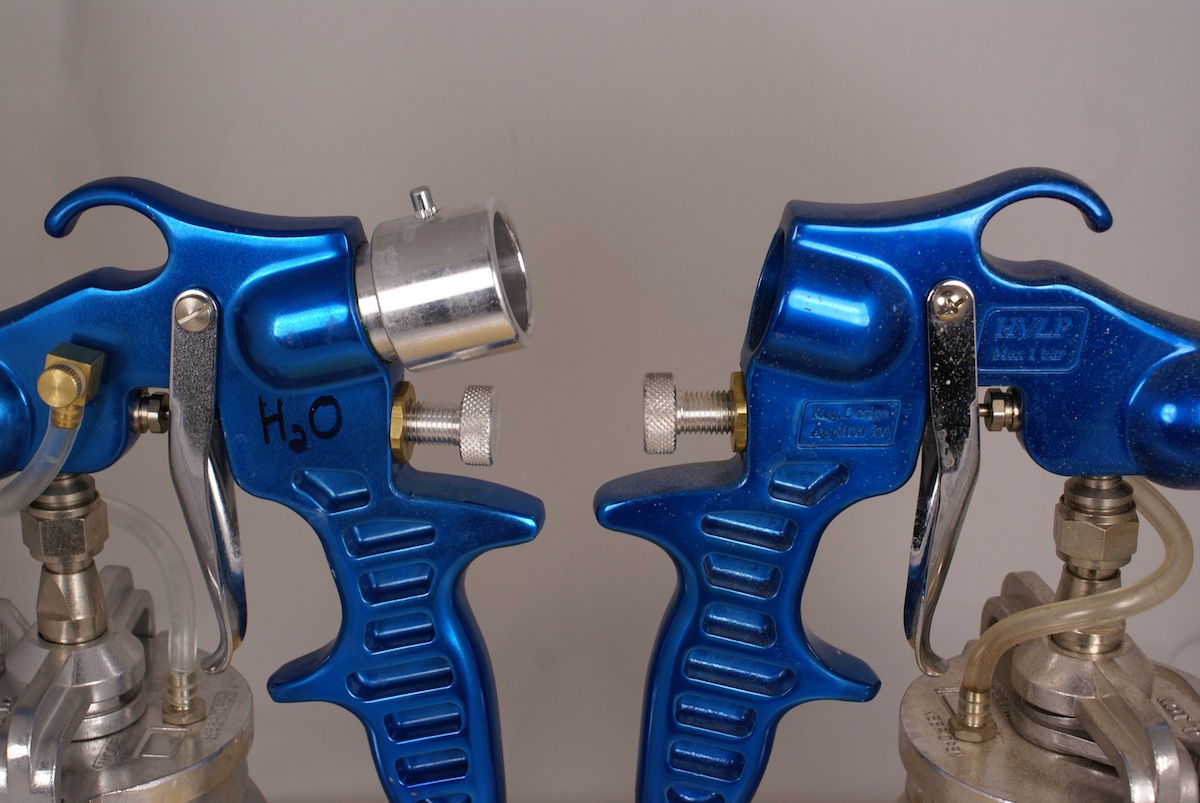
The gun on the Earlex is very similar to the old model, but features a new hose connector. I am told it was re-tooled for greater longevity but I never really saw a problem with the old one. Regardless, once connected, the hose is secure and doesn’t fall out.
I have sprayed about 5 projects using this system with finishes including lacquer, water-based poly, shellac, and water-based dye. In general, I can safely say that this unit performs every bit as well as my $700 Fuji 3-stage turbine. And the HV6900 retails for $200 less at $499!
So how does it stack up to the other 3-stage turbines on the market? Well, the only unit I have extensive experience with is the Fuji, which I feel is on par with other similar units on the market. And generically-speaking, here are the things your extra money will get you:
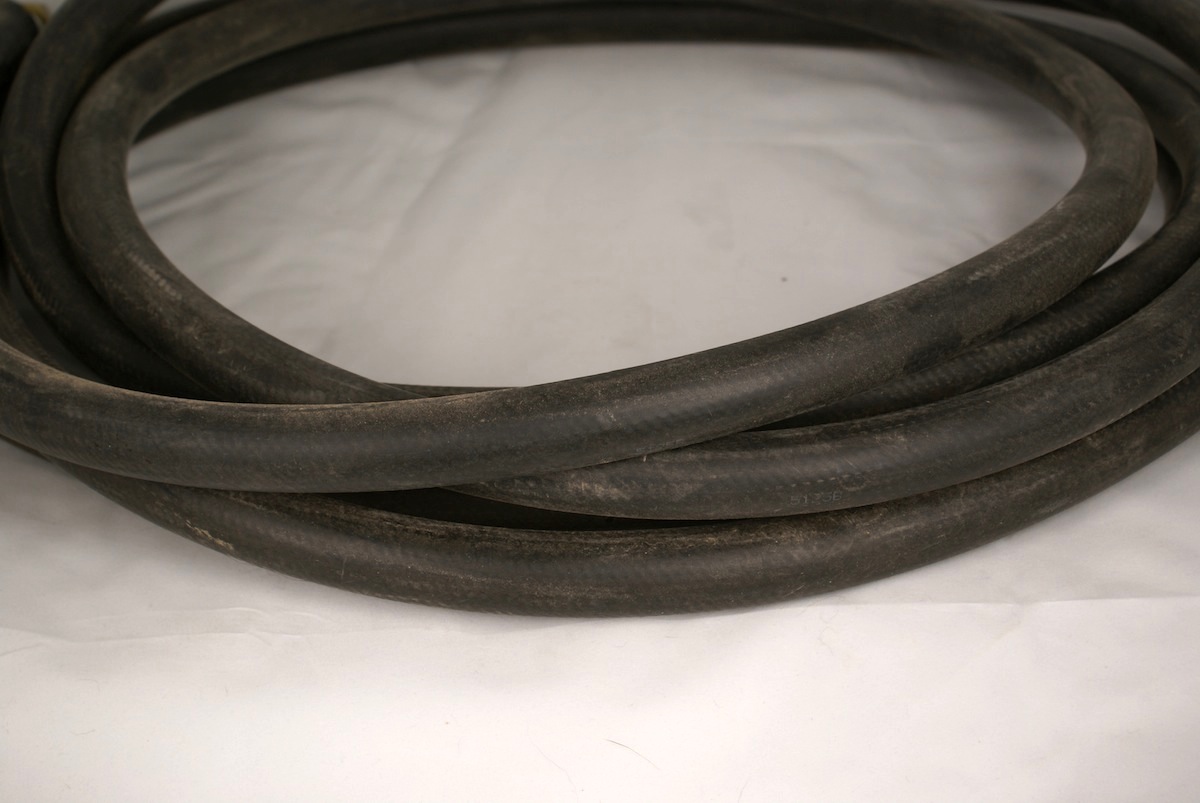
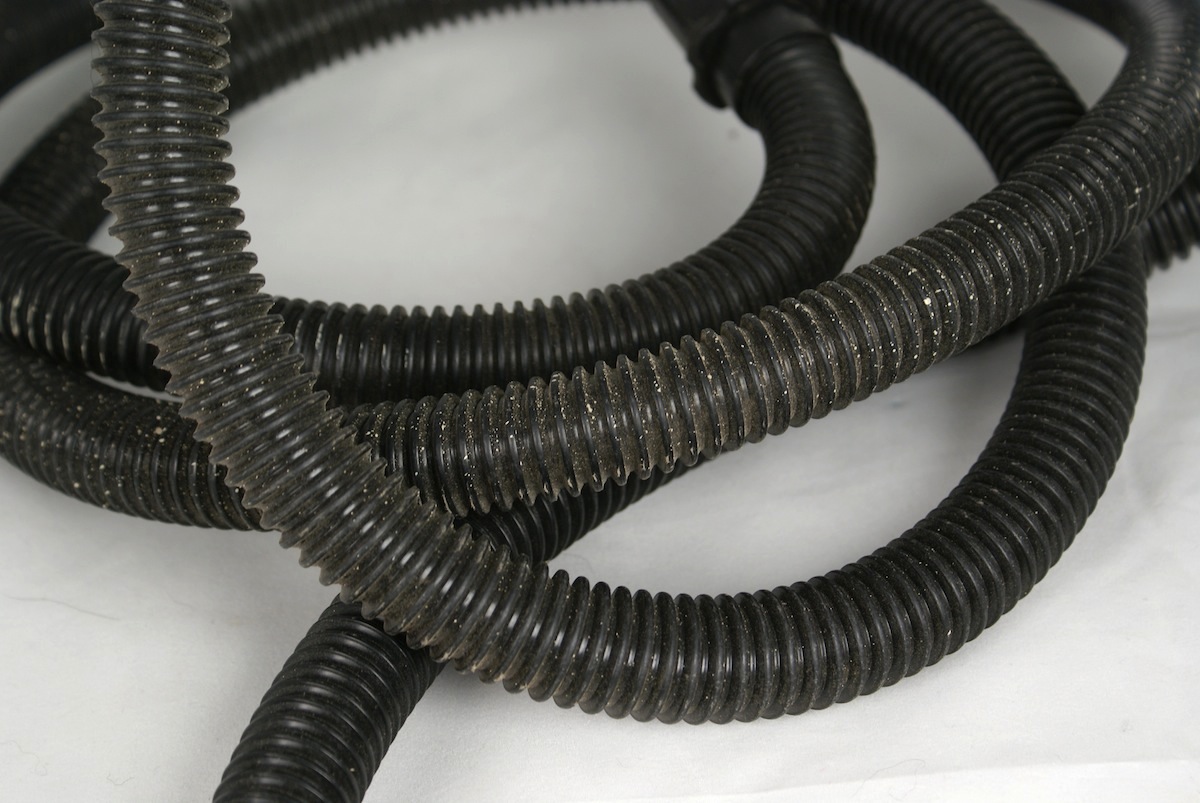
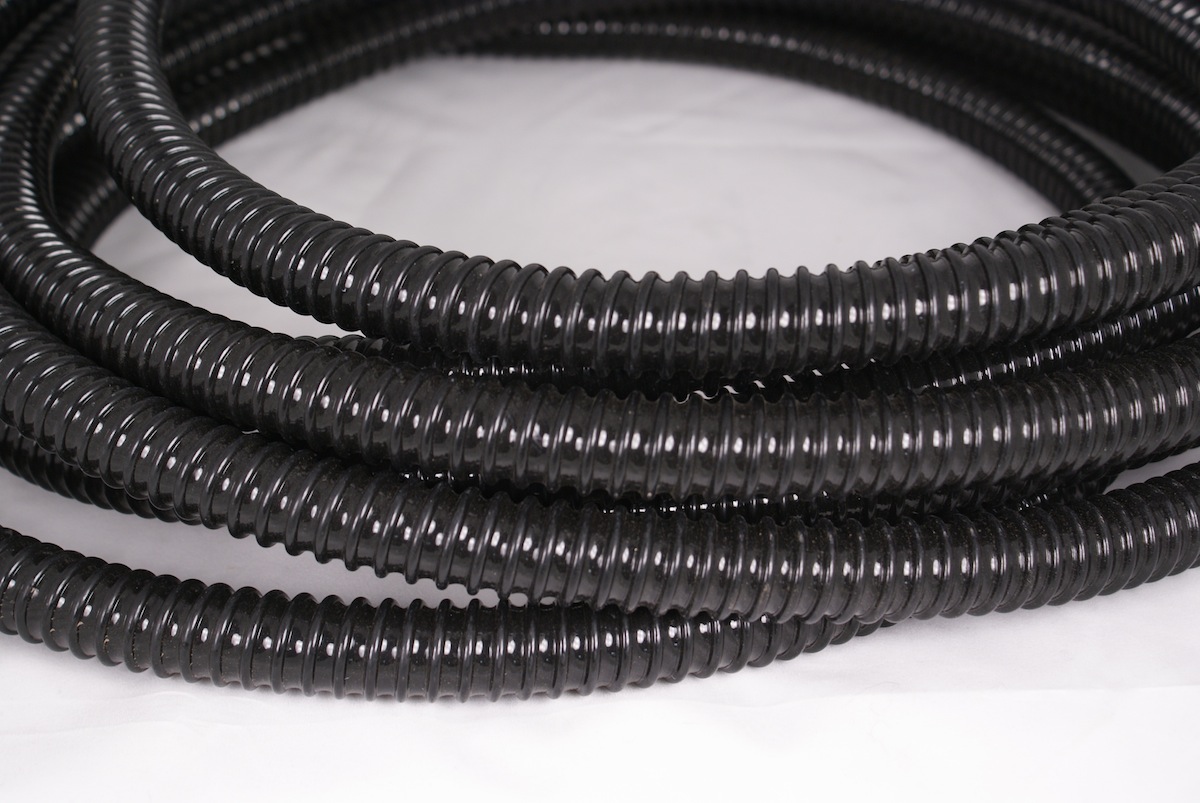
- A more durable hose. A rubber hose will generally take a little more of a beating. The HV6900 hose is much improved over the HV5000 and appears to be made of a thicker plastic with a hard rubber coating, but its still not quite as good as a heavy-duty rubber hose. Now there is an optional 30′ super flex hose available for $129. Earlex says this upgraded hose is as strong as a standard rubber hose, with the added benefit of being lighter and more flexible. Pictured below are, from left to right, are hoses from the HV5000, the HV6900, and the Fuji Q3.
- A gun with more settings. The Earlex gun features only two controls: one for fluid and one for fan orientation. On my Fuji gun, I have an additional control for the size of the spray pattern and an air flow valve in the hose itself. I rarely touch either setting so I really don’t miss them on the Earlex.
- A little more psi. The HV6900 is rated at 5 psi, and comparable units (Fuji, Apollo, Campbell Hausfeld) are rated at 5.5 – 6.0 psi.
You’ll need to decide for yourself if the above things are worth the extra money. But if I were in the market for a new 3-stage turbine, I would buy the Earlex HV6900 and spend the extra $200 on things like new tips, cups and maybe even an extra gun.
As with all my reviews, you should always read through the comments section below. Our readers tend to add valuable insights that I either didn’t know about or didn’t think of. After all, I am NOT a professional reviewer. So to really get the full picture on a product, be sure to include these comments in your research.



34 Responses to “Earlex HV6900 Spray Station- Review”
I would be interested to hear how these compare to air compressor driven HVLP spraying.
Also, how does this one compare to the HV5000 sound wise?
Hey Ed. My only experience with a compressor-driven system was back when I worked in a refinishing shop. It was a decent sized compressor and a set of pressure pots. The gun was a Binks unit and it sprayed like a dream. But we also had a nice spray booth and great lighting, which certainly played a role in the whole positive experience. And although it was quieter since the compressor wasn’t on the whole time, the spray booth was on, lol, so it was loud as hell. As far as the final finish result, I doubt I would be able to tell the difference between something that came from that shop and something I could produce in my shop now.
Now here’s the deal with the sound. I decided NOT to test it on this go round. The reason is because they are all loud. Even my Fuji Q3 is loud enough to require ear protection. So a difference of 5-20 decibels isn’t going to really make a difference to me. What I didn’t account for is what Izaac says below, and that is the “neighbor factor”. I live under a flight path for an air force base so a little compressor or turbine noise is the least of this neighborshood’s problems, lol. But for others, this is a valid concern. But here’s the thing with turbines. Unlike compressors, turbines sound like loud vacuum cleaners. The higher frequency noise dissipates significantly with distance and is easily blocked by things like walls and doors. A small oil-free pancake compressor is going to be SIGNIFICANTLY louder at a distance and through walls.
So regardless of the comparative noise level between turbines, you are going to want to protect yourself. And pretty much all turbines will be quieter and easier to muffle than a compressor. My opinion of course. :)
This page has a great volume demo between the Mini-Mite 3, Q3 Pro and a Vacuum cleaner.
http://www.hvlpsales.com/Q3Pro.html
If you want to be neighbor-friendly, the Q3 Pro does seem quite a bit quieter – but for $200 more, you want to really like your neighbors ;)
how noisy is this system compared with oil-lubricated compressors and the oil-free ones?. My neighbors are not happy when I varnish my projects with my Porter Cable 13 gallons oil-free compressor. :(
Seems like this space is heating up a bit. Fuji recently? released the Mini-Mite 3X, which is the “loud” version of their Q3 Pro turbine – at $500; exact same price as the HV6900. So in terms of Marc’s comparison, it looks like you can get all those extras for the same price, but I’m not sure how the noise volumes compare.
I think I saw that the Mini-Mite 3X (and Q3 Pro) use the same motor as the HV6900.
I’ve used neither and never sprayed :) – this is just based on web research.
Yeah I saw that too, after I wrote up my review. Definitely becoming a more crowded space now. Now I knew the Q3 and Mini Mite use the same motor, but I didn’t know it was the same one that’s in the HV6900. That would be very interesting if that were the case!
Yeah – more web research seems that they are the same manufacturer, but different motors, my bad.
Looks like (from the web):
Fuji: 101 cfm at 6 psi (http://www.fujispray.com/what_is_hvlp.html)
Earlex: 5 psi and 71 cfm (http://www.earlex.com/pdf/6900US.pdf)
if your q3 and the mini-mite 3 were the same except for sound would you rather have the HV6900 or mini-mite? They cost the exact same amount. what gun do you like better?
Is the pre-cat cab acrylic lacquer you mention in the viewer questions section a pre-cat or acrylic lacquer?
Thanks
jdog
Well, I would buy whichever one I could get on sale lol. As for the gun, well, I like them both. But the Fuji gun has more adjustments. So some people would definitely prefer Fuji gun so they can really dial everything in. For beginners though, I recommend the Earlex gun since you really only have two simple adjustments.
why dont you lol some more, is that not the worst accronym ever duh lol, excuse me lol, lol.lol. iam so funny lol.just go paint something.
OK lol. Since you mentioned it, maybe I’ll lol even more! You know what makes me lol? A person who gets upset at an acronym! lol
I couldn’t find any relatively new test review of HVLP sprayers and nothing comparing the Earlex, but if there’s any interest, here’s a test review of some HVLP sprayers. I didn’t see a date on the review and the last page (page 5) has a summary of the units but all of the picture links are broken, however the information is there.
http://www.toolsofthetrade.net.....ionID=1497
Here is an HVLP review in an old Wood Magazine article (April/May 2006) on 10 HVLP systems and their picks if anyone is interested:
http://www.southern-tool.com/s.....LPTEST.pdf
Comparing the HV6900 price to the Fuji Q3 Pro price is not fair. It should be compared to the Fuji Mini-Mite 3X wich sells for $479.
If noise is a concern, it’s nice to have the option with the Fuji Q. The HV6900 is more than 3 times louder.
Fuji guns are non-bleeders. Fuji offers choice of gravity feed (pressurized) or syphon (GT-X2 or XT-2). Fuji has 25 ft quality hose (13 ft is way too short). Fuji turbine has higher output. The choice seems obvious.
Reviews written 2 or 3 years ago are useless now. The manufacturers enhanced their products since then.
Keep in mind the only reason I compared this unit to the Fuji at all is because the Fuji Q3 is the unit I own. I have never used the Mini-mite so I didn’t think it would be fair to discuss it in the review. But you are absolutely right about the price comparison. The Mini-Mite would be the more fair comparison.
In the 2-stage and entry level arena, the HV5000 seems a much clearer bargain. In the 3-stage space, it seems their position in the market isn’t quite as solid as I originally thought. Maybe if they hit the $399 price point (although that’s a lot to ask for)?
I think that quality tools generally cost a little more. But in the long run, one always saves by buying once.
Fuji (http://www.fujispray.com/index.htm) just introduced a new line (Gold series) of turbine systems and a new gun. In my opinion, the Fuji systems are top systems at very decent prices. And, they’re made right here in North America.
Ooooooh Gooooold! I didn’t know about this new line. I’m gonna take a look now… Thanks for the link Richard.
Marc,
Have you seen the Feb. 2010 issue 210 of FWW? They do a small review of the Earlex 6900. The writer was not all that impressed. He dislikes the gun. His comments were the gun was uncomfortable and had to much spray volume with no air control. I would like to hear you comments on the review.
Virgil
Yeah I read it today. No real surprises there and its accurate. I agree that the air feed tube is in a bit of a weird place. It would be better if it were to the side of the can or in the front. But its in the back where your fingers are. I don’t know that I would call it uncomfortable and it certainly doesn’t affect spray performance. I just went out in the shop and compared the feel of my Fuji gun to the feel of the Earlex gun, and the Fuji is more comfortable to hold. But on my way back in to write this response, I realized why I never thought to compare them before: because it really doesn’t matter to me, lol. I suppose if I were spraying all day every day in a finishing shop, I might consider the handle an important feature.
As for the spray volume and air control….I agree it would be nice to have air control for special situations. But for most spray jobs, the constant air pressure won’t be a problem.
The system is considered a “budget” setup, so you would have to expect sacrifices somewhere. And I think the Earlex system sacrificed in the right places. The real question is, as mentioned in the above comments, is this really a “budget” unit. With comparably price units like the Fuji Minimite on the market, this unit is going to be a little bit of a hard sell for some folks. So it should be interesting to see how the landscape changes over the next year or so.
Marc,
A couple of comments on your observations of the review;
Even if you weren’t in a spray room all day with this gun it would be tiresome. The moment I picked it up it felt strange. Using it for under a half hour at a time I found my forearm getting tired. I finally figured out that the flatness of the grip contributed to that. That and the air tube constricting the space for your fingers…. Let’s face it, that’s where the rubber meets the road.
Having an air control valve is essential even for the beginner. Say I’m spraying cabinet doors. I turn the air down a bit when I’m doing the edges. It helps greatly with the amount of over spray I send onto the back of the door.
Same with spraying shellac, dyes and other low viscocity liguids, I use less air. I can even air brush with it. I could go on and on but you get the idea. It would give the user far more versatlity and allow them to be better finishers.
You feel that Earlex sacrificed in the right places. Which ones?
PG
Could be all the spinach I eat, but my forearm does not fatigue when I use this gun. Well, at least it doesn’t tire any more than usual. 30 minutes with a full cup would fatigue anyone’s forearm. If the gun is more fatiguing than most guns, of course that’s something people need to know about. But I can only report how it feels to me, and in the context of 10-15 minute spray sessions, the gun didn’t really feel uncomfortable to me.
While I totally agree that an air control valve is a nice feature to have and certainly offers versatility, I personally don’t consider it “essential”. To quote from the Fuji Q3 manual, “There is one thing to remember about the air control valve – it is the last in the chain of operations after thinning, adjusting size/shape of the spray pattern, and adjusting the flow of material through the gun.” I will add to that the need to use the right needle and cap set. But if you are going to cut a feature to save money, it just makes sense to cut the feature that is last in the chain of settings you need to check. And personally out of all the settings on a gun, I do consider the air control valve the least important simply because I use it the least.
The hose is also a little “cheap”, and I feel that was a reasonable choice to sacrifice in the name of cutting coasts.
Now the real problem with the Earlex, as we’ve discussed in the comments above, is that for a comparable price you can actually get the missing features in another turbine on the market. So although it isn’t reflected in my original review (I was comparing it to the Fuji Q3, originally), its pretty clear after reading the comments that the Fuji Mini Mite is a real contender. I really think $399 would be the sweet spot for this unit and might justify the sacrifices. But I don’t think Earlex will take my advice on that, lol.
Marc,
I thought our exchanges would be in here.
PG
Your second response was via email so it was just an email exchange. For anything to appear on the site, the comments have to be written here.
Do you prefer the gravity or suction guns?
Suction for me….
Anyone here used an Apollo HVLP? I was thinking about getting the Apollo 900 but am wondering if you guys think Fuji is better.
http://wwww.hvlp.com/turbine_detail.php?id=4
Oh man,now I think the Earlex is the way to go.
It’s way cheaper than an Apollo……. but I did see a nice used one on Craigslist for $600…hmmmm lol
I’m just reading this now because I just bought an Earlex 5500. I’ve tried it a couple of times now with no success. I get large gobs landing amongst the fine spray. I couldn’t level it so had to wait till in dried and then sand it all down and start again. I find the constant airflow annoying. I don’t have a spray booth and I vacuumed very well I thought but the constant blast of air going thru the gun raised lots of dust. I am not familiar with spray guns but a friend found it confusing too. He has used HVLP guns with an air compressor and says that there is no air comes out of the gun until he pulls the trigger. Am I missing something?
There are lots of guns out there that have a constant air flow like that. I never really found it to be a major problem though. If you keep the finishing area clean it shouldn’t be too bad. As for the gobs, that sounds more like a viscosity issue. You might try thinning it a bit more.
OK, so I didn’t get a faulty one. I’ll try the viscosity cup to see how it “measures up” (snicker). I was using Varathane’s oil base varnish (black can). How do I determine the proper amount of product coming out of the gun? Do I adjust it slowly from “none” to “just a little” or is there a more accurate way to get it right?
I usually spray a test surface. I start with the fluid closed off and slowly increase it until I see the spray pattern I like. There is some room for error here and it doesn’t need to be exact. Once you have a spray pattern that lays down a nice even coat at the speed you move your arm, you should be in good shape.
You can get a lot more scientific about it and if you want more details on it, I recommend this: http://www.amazon.com/gp/produ.....1600850928
OK, I’ll go from there. Thank you very much for your help
Marc:
Is their a considerable difference in the sound level when you are using your Fuji Q3 System versus the Earlex 6900 system? Does your Fuji Q3 have the sound reduction technology? I am trying to figure out if I should save additional money to purchase a system with sound reduction or go with the Mini-mite 3 or Earlex 6900 with no noise reduction. I have heard the Earlex 5000 and the sound level is bearable especially with even modest hearing protection.
To be honest, I have yet to hear a turbine that didn’t require ear protection when in close proximity. The hoses are rather long though, so you can certainly get some distance between you and the noise maker. But to answer your question, I haven’t really taken notice of the difference. I am sure there is one, but I usually have hearing protection on when I turn them on so I wouldn’t really notice. I’d say shop by performance/quality/price and if you can get a quieter unit, that’s just a nice bonus.
I use a Earlex 6900 and love it. It is everything I need. Has plenty of power to push the paints and finishes I use. The air tube that everyone says gets in the way, can easily be moved by loosening a nut and turning the feed tube to its correct position in the paint jar. The gun feels fine in my hand and the noise the turbine makes is no bother. The all make noise!